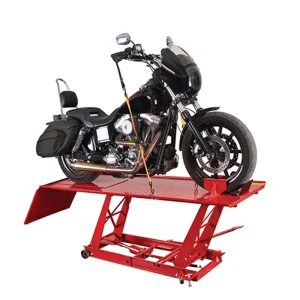
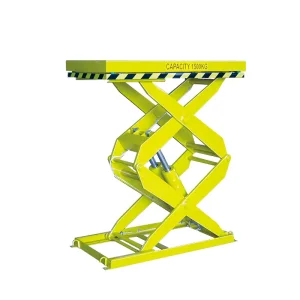
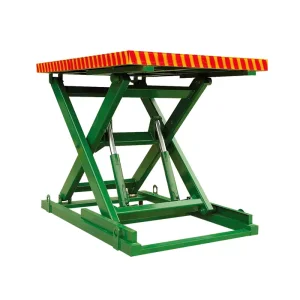
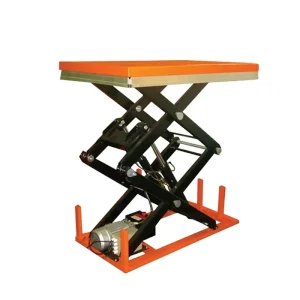
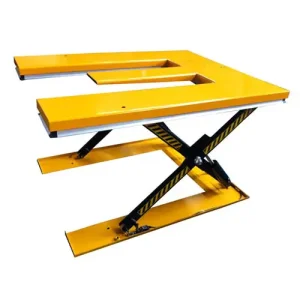
Australia’s industrial sector is undergoing a massive shift toward rapid automation, heightened workplace ergonomics (driven by SafeWork Australia mandates), and extreme-duty equipment longevity. From major logistics centers in Western Sydney and Melbourne’s western industrial belt to heavy machinery workshops in Perth and food processing units in Queensland, the requirement for dependable Scissor Lift Platform Carts and stationary hydraulic lift tables has reached an all-time high.
Selecting the optimal hydraulic lifting hardware requires a granular understanding of load dynamics, duty cycles, ambient thermal factors, and national safety standard compliance. Modern Australian enterprise buyers no longer evaluate scissor lifts based solely on price. The decision matrix is guided by Information Gain metrics: Total Cost of Ownership (TCO), thermal stability of hydraulic fluid in remote inland operations, structural rigidity under non-uniform loads, and seamless integration with localized material handling workflows.
Equipping warehouses and production facilities with high-precision electric hydraulic lift carts reduces manual handling injuries by up to 68%, directly aligning with AS/NZS 1418.10 safety frameworks while optimizing throughput efficiency across multi-shift operations.
The global material handling equipment market is projected to expand significantly, driven by the expansion of automated warehousing, e-commerce micro-fulfillment centers, and heavy equipment manufacturing. globally, hydraulic lift platforms serve as the fundamental muscle for vertical positioning. However, the Australian market presents unique operational conditions that demand enhanced engineering considerations:
Inland Australian facilities experience summer ambient temperatures exceeding 40°C. Hydraulic power units must utilize anti-shearing ISO VG 46/68 oil and heavy-duty seals to prevent fluid breakdown and pressure loss.
With primary industrial corridors located near maritime ports (Fremantle, Botany Bay, Port Melbourne), exposure to airborne salt requires high-grade 304/316 stainless steel or electro-galvanized surface treatments.
Compliance with AS/NZS standards requires anti-pinch scissor geometry, velocity fuses on hydraulic cylinders, double-acting limit switches, and ergonomic toe-guards as standard features.
Furthermore, Australia's mining infrastructure in the Pilbara and Kalgoorlie demands ultra-heavy-duty custom platform carts capable of handling die loads up to 5,000 kg while operating reliably on rugged, non-standard concrete floors. Matching factory output to these specific Australian challenges is where leading manufacturer partnerships deliver immense value.
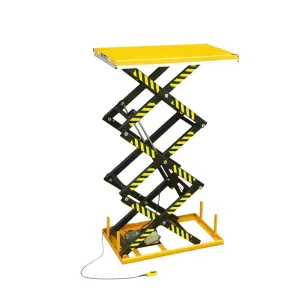
To evaluate the structural integrity of a scissor lift platform cart, engineers analyze the stress distribution across the pivot pins, scissor arms, and base frame under full payload conditions. Low-quality lifts exhibit deflection (bending) under off-center loads, causing binding in the cylinder and premature bushing failure.
| Engineering Feature | Standard Commercial Grade | SINOLIFT Heavy-Duty Australia Specification |
|---|---|---|
| Scissor Arm Material | Standard Q235 Carbon Steel bar | High-Tensile Q345B Solid Steel Plate / Manganese Alloy |
| Pivot Bushings | Unlubricated steel-on-steel sleeves | DU self-lubricating oil-free bushings with grease nipples |
| Hydraulic Cylinder | Single-seal low-pressure cylinder | Honed chrome-plated ram with double-lip polyurethane seals |
| Safety Valves | Basic check valve | Explosion-proof safety velocity fuse & rupture protection |
| Electrical Rating | IP44 indoor only | IP65 water/dust resistant power pack (Option for IP67) |
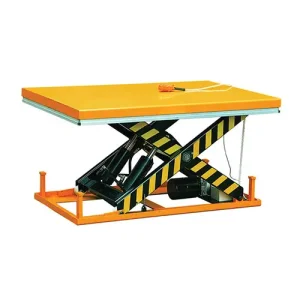
In high-frequency production lines—such as automotive component manufacturing or automated pharmaceutical packaging—a scissor lift platform cart may complete over 200 lift cycles per day. High-grade electro-hydraulic power packs equipped with thermal overload protection ensure continuous operation without pump cavitation or fluid overheating.
Australian industrial companies often face high domestic fabrication costs and long lead times for specialized material handling machinery. Sourcing directly from top-tier Chinese manufacturers like SINOLIFT bridges the gap between cost efficiency and world-class mechanical precision.
Utilizing high-power fiber laser cutters, robotic arc welding arms, and CNC machining centers guarantees that every scissor arm profile is cut with sub-millimeter accuracy, eliminating frame twist and ensuring even platform lifting.
China's comprehensive supply ecosystem allows instant access to high-grade raw steel, premium hydraulic pumps (such as Bucher/Winner hydraulics), and certified electrical controls at economies of scale impossible to match locally.
The result is a direct 30% to 50% savings in capital expenditure (CapEx) for Australian buyers without compromising structural safety ratings or component longevity. Combined with efficient direct shipping routes from Shanghai/Ningbo ports to Sydney, Melbourne, Brisbane, and Fremantle, delivery turnarounds are optimized.
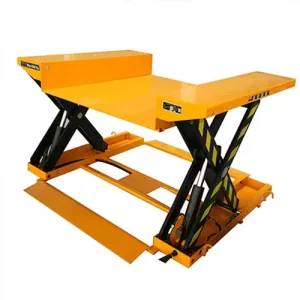
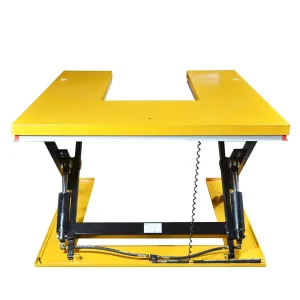
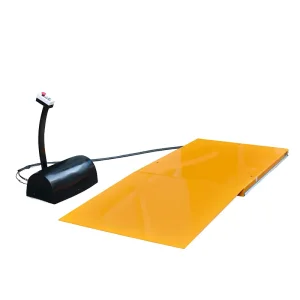
E-commerce and third-party logistics (3PL) distribution centers utilize stationary E-type low-profile electric lifts for palletizing, de-palletizing, and seamless integration with roller conveyor lines.
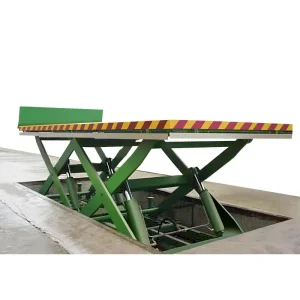
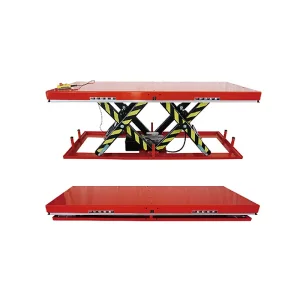
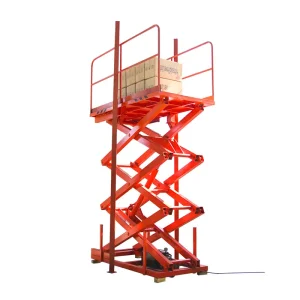
Heavy equipment workshops require customized high-tonnage SJG scissor platform lifts to elevate heavy engine components, drill bits, and pump assemblies for maintenance teams.
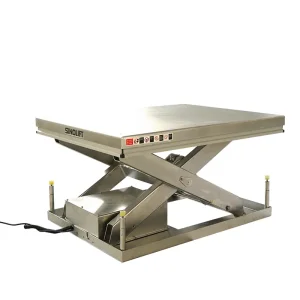
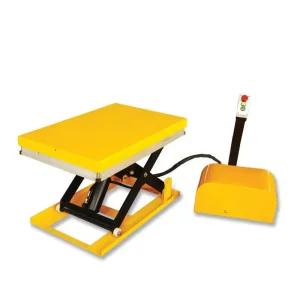
304 Stainless Steel electric stationary lift carts provide washdown resistance, preventing corrosion during daily chemical sanitization routines in meat processing and pharmaceutical plants.
Sinolift is one of the leading material handling equipment manufacturers in China and a key player in the Global hydraulic industry.
Our headquarter, Shanghai Sinolift Mechanical and Electrical Equipment Co., Ltd. is located in Nanhui Industry Park and established in 2005. From 2017, We invested the third new plants in Hangzhou City, Zhejiang Province to manufacture hydraulic handling equipment such as Dock Equipment, Tail lift, Dock leveler, Lift Tables and Access lifts. All of our products are manufactured with the highest quality materials and we guarantee their dependability.
Whether your company is moving heavy-duty materials or lightweight parts, Sinolift will have a materials handling solution for the task. Each product is made according to JB/T 9229.1(2/3)-1999 standards. We have passed ISO9001, CCMA, CE and other international certifications. Products are exported to Europe, America, the Middle East, Southeast Asia, Australia, and other countries and regions. The domestic market is spread across the country, with hundreds of distributors, and now has a complete sales and after-sales service network.
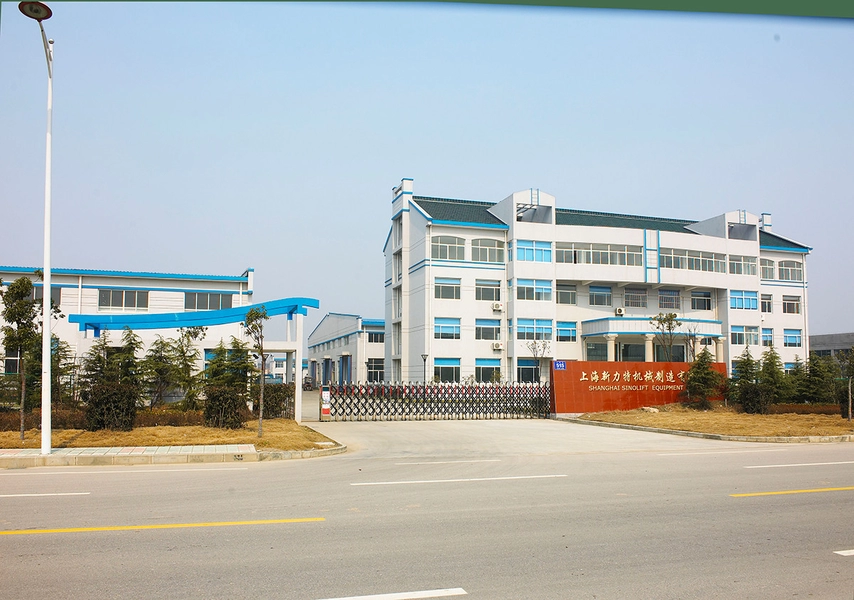


Having over 5,000 successful installations worldwide has supplied us with the in-depth experience and knowledge that we pass on to every project that we handle in Australia and globally.
At SINOLIFT, we take pride in having the widest hydraulic handling product range available. We always make sure to have a minimum stock of 2000+ units – a testament to our dedication to product availability to ensure fast delivery to Australia.
Our vast array of options guarantees that we can cater to all your material handling needs, no matter the specifics of your operation or the complexity of your requirements. SINOLIFT provides the exact solution for your application.
When acquiring hydraulic lift equipment, purchasing price constitutes only 30% of the lifetime cost. The remaining 70% comprises maintenance, power consumption, operational downtime, and compliance checks. Australian facility engineers prioritize long-term reliability by focusing on three key engineering pillars:
Using high-grade polyurethane seals and Japanese NOK oil rings prevents hydraulic leaks, avoiding workplace slip hazards and costly fluid top-ups.
Heavy-duty copper-wound motors with S3 working duty cycles resist thermal degradation during peak warehouse operating hours.
FEA (Finite Element Analysis) stress modeling ensures steel frames withstand repeated impact loads during forklift loading without warping.
Implementing a routine inspection schedule—checking safety limit switches every 3 months and inspecting hydraulic hose integrity every 6 months—ensures uninterrupted operation across Australian logistics hubs.
Yes. All lift tables exported to Australia are built in accordance with International safety directives and can be configured with standard Australian electrical setups (240V single phase or 415V three-phase 50Hz), anti-pinch safety perimeters, emergency stop controls, and velocity safety valves to comply with AS/NZS 1418.10 and AS 2550.10 frameworks.
We provide versatile electrical options: AC 220V/240V (Single Phase, 50Hz) for standard workshop outlets, AC 380V/415V (Three Phase, 50Hz) for industrial manufacturing plants, or DC 12V/24V battery-powered hydraulic packs for mobile platform carts.
Absolutely. As an OEM/ODM manufacturer with 49+ precision production machines, we custom-engineer platform length, width, stroke height, load capacity (from 100 kg up to 10,000 kg), roller top add-ons, and stainless steel construction based on your exact engineering CAD drawings.
Standard model production takes approximately 10 to 15 days. Direct ocean freight from our Hangzhou/Shanghai facility to major Australian ports (Sydney, Melbourne, Brisbane, Fremantle) typically takes 14 to 20 transit days, allowing rapid delivery for critical project schedules.
Connect directly with SINOLIFT engineering specialists today to request custom CAD drawings, factory-direct wholesale pricing, and technical advice tailored to Australian industrial standards.