Explore our high-performance hydraulic and electric lift tables engineered for extreme durability, workplace safety compliance, and maximum operational throughput.
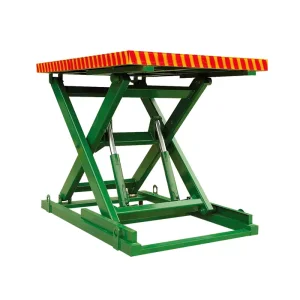
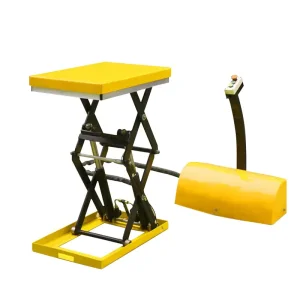
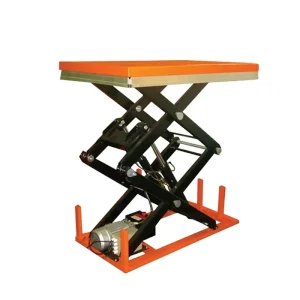
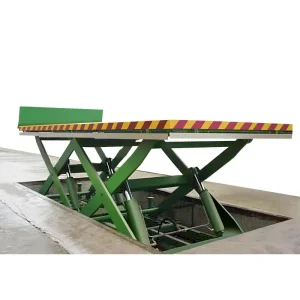
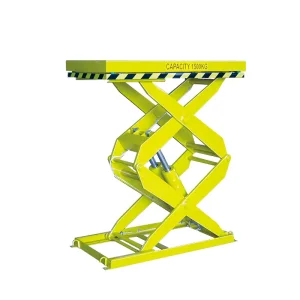
In modern high-density warehousing, automated manufacturing cells, and heavy-duty logistics hubs, vertical space optimization is a vital operational metric. A Double Scissor Lift Table represents a sophisticated mechanical integration engineered to solve a fundamental material handling challenge: achieving elevated vertical travel while maintaining a compact footprint and structural rigidity.
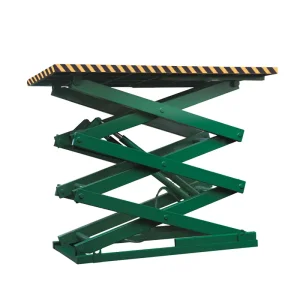
Unlike single scissor mechanisms that are constrained by geometric elevation ratios (where vertical travel is strictly bounded by platform length), double scissor lift tables utilize stacked pantograph leg assemblies. This dual-pantograph architecture doubles the vertical stroke without expanding the horizontal footprint of the table base. However, doubling the structural linkage introduces complex mechanical considerations that require advanced engineering, precise tolerance controls, and high-tensile material selection.
At maximum elevation, extended scissor legs experience severe bending moments and torsional stress. Premium OEM factories utilize solid high-tensile steel legs (Q345B/ST52-3) and reinforced center pivot pins to minimize platform deflection under full rated capacities.
Dual-cylinder configurations require precision-calibrated flow divider valves and mechanical torque bars to ensure perfectly synchronized cylinder extension. This prevents uneven platform tilting, seal blowouts, and dynamic load imbalance during operation.
Integrated safety features include anti-drop hose rupture valves, aluminum safety perimeter trip bars for instant obstacle-triggered shutdown, and mechanical maintenance locks designed to support 150% of the nominal capacity during maintenance routines.
The global demand for industrial vertical lift tables is undergoing a rapid transition driven by three macroeconomic tailwinds: strict regional labor safety standards (such as OSHA in North America and EU Machinery Directive 2006/42/EC in Europe), the boom of warehouse automation, and the expansion of heavy industrial manufacturing across emerging markets.
Repetitive strain injuries (RSIs) account for over 30% of industrial worker compensation claims. Modern buyers deploy double scissor lifts to maintain workpieces at optimal elbow-height positioning across assembly lines.
Leading wholesale factories now integrate Industry 4.0 IoT sensors into hydraulic power units to track oil temperature, pressure cycles, motor vibration, and operational hours for predictive maintenance.
Transitioning to variable frequency drives (VFD) and high-efficiency IE3/IE4 hydraulic pump motors reduces standby power consumption by up to 40%, aligning with corporate ESG sustainability mandates.
Procurement officers prioritize structural longevity over low initial purchase costs. Heavy-duty pivot bearings, self-lubricating DU bushings, and hard chrome-plated piston rods eliminate frequent replacement downtime.
China's modern manufacturing infrastructure has evolved far beyond low-cost production into an advanced ecosystem of automated precision, metallurgical superiority, and end-to-end supply chain integration. As a epicenter for material handling equipment, enterprise wholesale buyers rely on Chinese OEM/ODM factories to deliver uncompromised quality, custom engineering, and rapid production cycles.
Direct access to primary steel production hubs allows Chinese factories to source premium structural steel shapes, seamless hydraulic tubing, and high-grade fasteners at standardized prices, insulating global buyers from volatile raw material surcharges.
Automated fiber laser cutting beds, robotic welding gantries, and automated shot-peening/powder-coating lines guarantee sub-millimeter tolerances, deep weld penetration, and superior corrosion resistance across every double scissor assembly.
Products are manufactured strictly according to National and International Standard JB/T 9229.1(2/3)-1999, fully certified with ISO9001, CCMA, CE, and ANSI/ASME material handling mandates for seamless international market entry.
Established in 2005 with headquarters in Nanhui Industry Park, Shanghai, Shanghai Sinolift Mechanical and Electrical Equipment Co., Ltd. has grown into one of China's premier manufacturers of specialized material handling and hydraulic elevation equipment. To support increasing worldwide procurement demand, Sinolift expanded its operational footprint in 2017 with a state-of-the-art manufacturing plant in Hangzhou City, Zhejiang Province.
Today, our specialized product matrix includes Dock Equipment, Tail Lifts, Dock Levelers, Hydraulic Double Scissor Lift Tables, Low-Profile Elevators, and Worksite Access Lifts. Every machine undergoes rigorous load-testing protocols up to 125% of nominal capacity before factory sign-off.
Whether your enterprise requires specialized stainless-steel 316 construction for cleanroom pharmaceutical production, explosion-proof ATEX-rated hydraulic power packs for chemical environments, or custom deck dimensions with integrated gravity roller conveyors, Sinolift's engineering team delivers exact turnkey solutions designed around your CAD specifications.
Request Technical ConsultationDouble scissor lift tables are deployed across diverse global sectors where significant vertical lifting heights must be achieved in footprint-constrained environments. Key operational applications include:
Integration into main chassis assembly lines where vehicle sub-assemblies must be elevated to upper overhead monorail systems or adjusted for ergonomic underbody wiring installation by technicians.
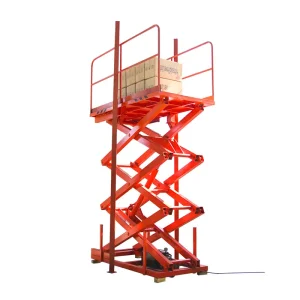
Serving as stationary cargo lifts connecting ground floors to elevated mezzanine storage levels, bypassing costly freight elevators while ensuring rapid pallet transfer capabilities.
Custom electro-polished stainless steel double scissor platforms designed with IP66-rated washdown motors and non-marking polyurethane wheels for transferring sterile batch ingredients.
Positioned inside maintenance pits or vehicle repair workshops to elevate engine blocks, transmissions, and heavy machinery parts to comfortable working heights for mechanics.
Paired with robotic palletizers where the double scissor table incrementally lowers as layers of boxes are stacked, maintaining a constant feeding height for the robotic arm.
Configured with heavy-duty ball-transfer or motorized roller tops for handling unit load devices (ULDs) at airport logistics terminals and freight forwarder centers.
Selecting the correct scissor lift architecture is critical to avoiding structural instability, premature wear, and operational bottlenecks. Use the technical engineering matrix below to evaluate your operational parameters:
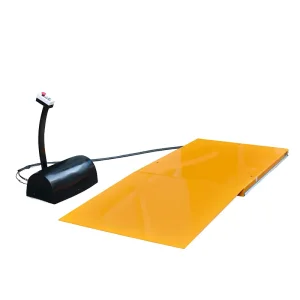
Best For: Low vertical travel (Up to 1.5 meters), high platform capacity (up to 10+ tons). Ideal for loading docks and low-profile feeding stations.
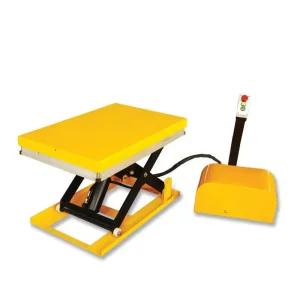
Best For: High vertical travel (1.5 to 4.0+ meters) with medium-to-heavy loads (500kg to 4,000kg). Compact footprint ratio, excellent vertical-to-collapsed height efficiency.
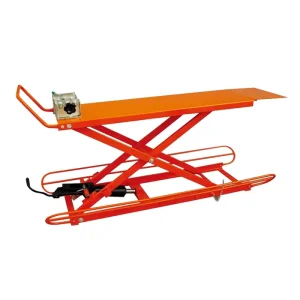
Best For: Extremely long workpieces (pipe handling, sheet metal, lumber). Combines two scissor pairs side-by-side or end-to-end to prevent platform sagging.
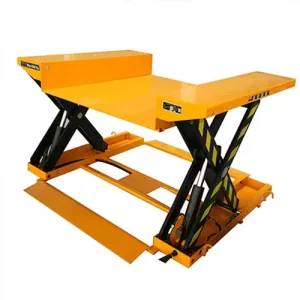
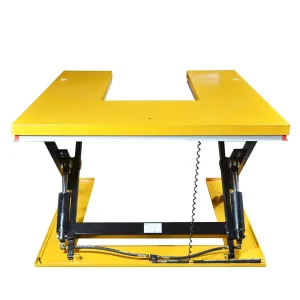
Best For: Pallet truck access without requiring a pit installation. Utilizes specialized U-shape or E-shape platforms for direct pallet loading.
Answers to critical technical, safety, and procurement queries sourced from global plant managers and equipment distributors.
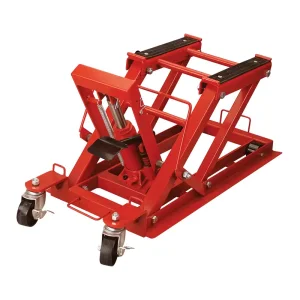
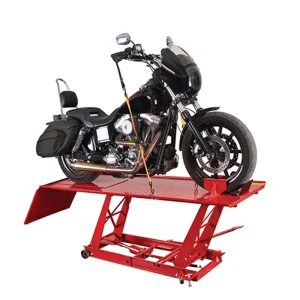
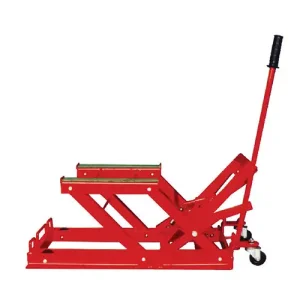
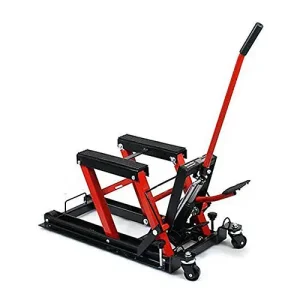
Discover specialized vertical movement solutions including motorcycle lifts, low-profile loaders, stationary elevators, and multi-scissor custom platforms.