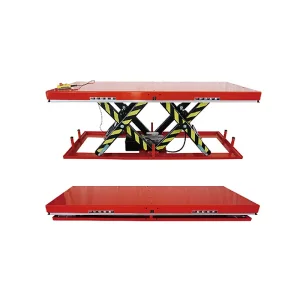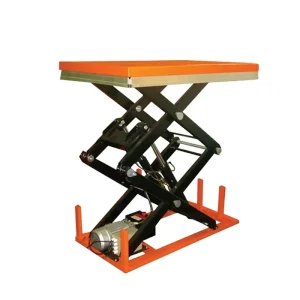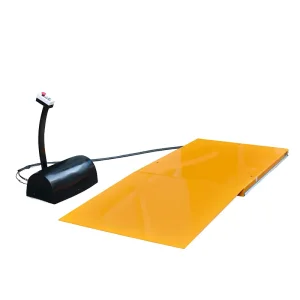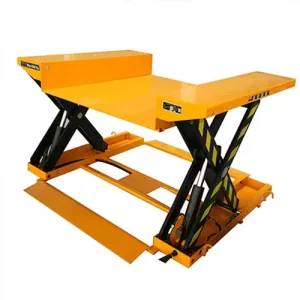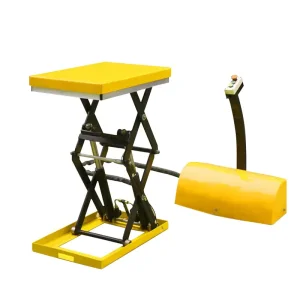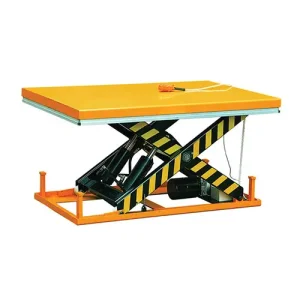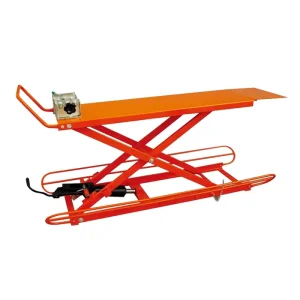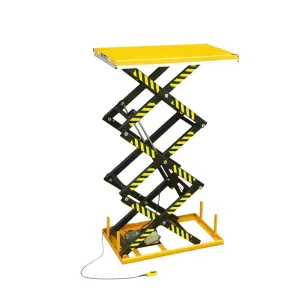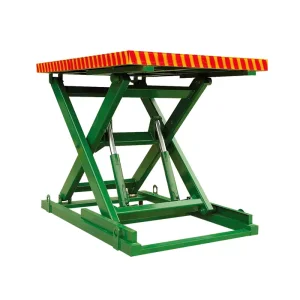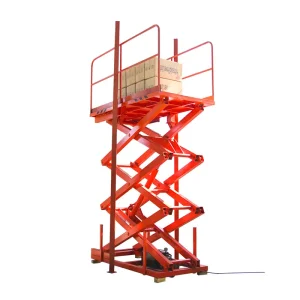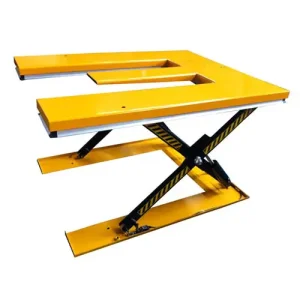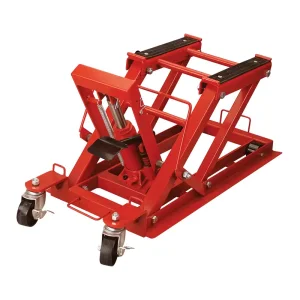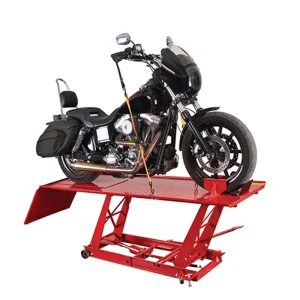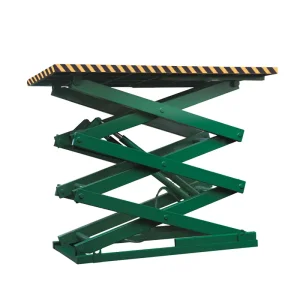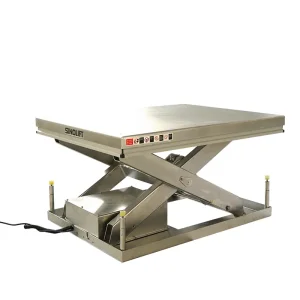
Explore our premium selection of stationary, low-profile, and multi-scissor electric hydraulic lift tables engineered for robust operations, ultra-smooth elevation, and maximum operator safety across global manufacturing plants.
In modern industrial logistics, automated assembly lines, and high-throughput warehousing, Portable Hydraulic Lift Tables serve as critical mechanical nodes for vertical elevation, payload stabilization, and ergonomic optimization. As Global Industry 4.0 paradigms mandate higher operational speeds alongside strict zero-harm workplace safety requirements, the mechanical integrity and fluid dynamic performance of scissors lifting systems have come under rigorous scrutiny.
A portable hydraulic lift table integrates a structural scissors linkage mechanism, high-pressure displacement hydraulic cylinders, an integrated power pack, and precision safety valves. Whether executed as mobile push-cart designs, low-profile U-shaped units for pallet jack integration, or heavy-duty stationary multi-scissors elevators, these systems resolve the fundamental physical challenge of translating hydraulic fluid displacement into linear vertical force.
Utilizing compact electro-hydraulic power systems with integrated gear pumps, check valves, and relief valves for continuous duty-cycle dependability.
Equipped with perimeter safety trip bars, explosive-proof velocity fuses, mechanical maintenance locks, and IP54/IP65 electrical protection.
Constructed from high-tensile Q235B/Q345B carbon steel legs or 304/316 grade stainless steel for aggressive chemical and food-grade cleanrooms.
Sinolift is one of the leading material handling equipment manufacturers in China and a key player in the global hydraulic industry. Our headquarter, Shanghai Sinolift Mechanical and Electrical Equipment Co., Ltd., is located in Nanhui Industry Park and was established in 2005.
Demonstrating our commitment to continuous industrial expansion, from 2017, we invested in our third new manufacturing plant situated in Hangzhou City, Zhejiang Province. This facility focuses on manufacturing advanced hydraulic handling equipment such as Dock Equipment, Tail lifts, Dock levelers, Lift Tables, and Access lifts. All of our products are manufactured using the highest quality raw materials and componentry to guarantee operational dependability.
Whether your company requires moving heavy-duty industrial payloads or lightweight precision parts, Sinolift provides tailored material handling solutions. Each product is engineered according to strictly enforced standards including JB/T 9229.1(2/3)-1999. Furthermore, Sinolift has passed ISO9001, CCMA, CE, and other international certifications.
Our products are exported to Europe, America, the Middle East, Southeast Asia, and over 120 countries and regions worldwide. Domestically, Sinolift maintains hundreds of distributors backed by a robust sales and after-sales service support network.
Contact Us Today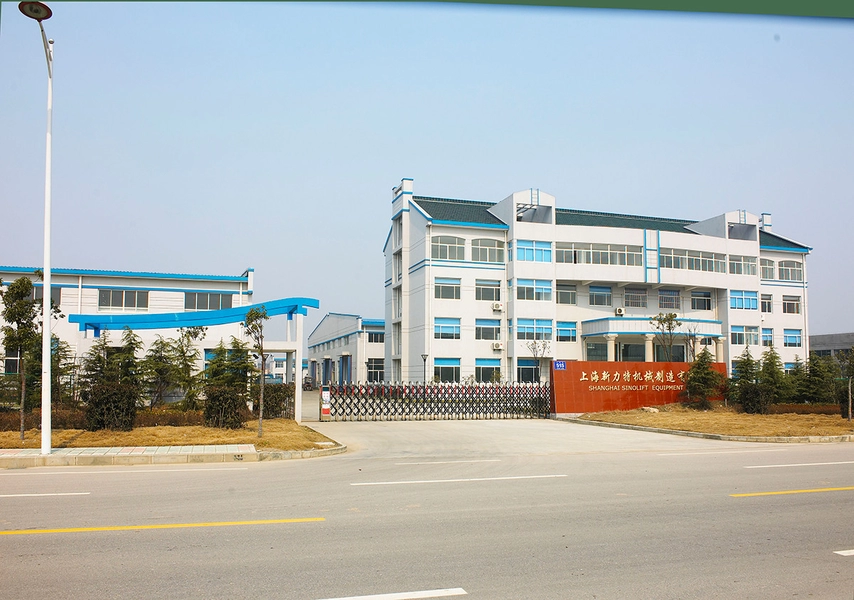


Having completed over 5,000 successful hydraulic lifting installations worldwide, Sinolift delivers unmatched application engineering knowledge to every client project, ensuring optimized system design and zero downtime.
At SINOLIFT, we maintain the widest hydraulic material handling product inventory in the market. We consistently retain a minimum reserve stock of 2,000+ units, guaranteeing ultra-fast dispatch and immediate project deployment.
Our extensive engineering capabilities guarantee tailored solutions regardless of your operating environment—including high-capacity scissors, custom platform dimensions, corrosion-resistant stainless steel, and explosion-proof electrical systems.
Understanding the structural dynamics of scissor lift platforms is vital for procurement engineers and facility managers. A hydraulic lift table relies on converting hydraulic pressure (Pascal's Law) into mechanical torque across pivoted steel legs.
The fundamental challenge in scissor lift mechanics is the nonlinear force requirement across the stroke profile. At the lowest collapsed height, the angle between scissor legs ($\theta$) is at its minimum, requiring maximum cylinder push force to initiate movement. The required linear thrust force ($F_{cylinder}$) is governed by:
Where W_load represents payload weight, n is the number of scissor arms per tier, L is total arm length, and a is the cylinder mounting pivot distance. Sinolift engineers optimize cylinder pivot geometry to minimize initial hydraulic stress, extending seal longevity and reducing motor peak current draw during startup.
Below is a breakdown of Sinolift’s major technical configurations designed for diverse global industrial needs:
| Lift Platform Model Series | Rated Load Capacity (kg) | Max Lifting Height (mm) | Lowered Height Profile | Power Unit Type | Primary Application Field |
|---|---|---|---|---|---|
| Sinolift HW-D Series | 1,000 - 4,000 | 1,000 - 2,000 | Standard Base (200-400mm) | AC 380V Heavy Duty Pump | Heavy Manufacturing & Heavy Cargo Handling |
| Sinolift HD Double Scissors | 800 - 2,000 | 2,000 - 4,200 | Medium Baseline Profile | Electro-Hydraulic Station | High-Reach Vertical Stacking & Elevators |
| Sinolift HY Low Profile | 500 - 1,500 | 860 - 1,050 | Ultra-Low (80-105mm) | External Power Unit Pack | Pallet Loading via Manual Hand Pallet Trucks |
| Sinolift HT Triplex Scissors | 400 - 1,000 | 3,000 - 6,000 | Compact Multi-Stage Base | High-Pressure AC Hyd. Pack | Multi-Level Warehouse Material Mezzanines |
| Sinolift 304 Stainless Steel | 500 - 2,000 | 1,000 - 1,700 | Standard / Low Profile | IP65 Sealed Hydraulic Unit | Pharma Cleanrooms & Food Processing Plants |
Through global user intent analysis, Sinolift categorizes industrial lifting applications into four key operational sectors. Each sector demands unique mechanical configurations, safety interlocks, and surface treatments.
In high-density distribution hubs, low-profile lift tables like the Sinolift HY and HL series eliminate the need for concrete pit digging. Hand pallet trucks seamlessly roll directly onto the platform, enabling fast pallet loading and unloading without dedicated forklift support.
Equipped with 304 Stainless Steel construction, specialized seals, and non-marking polyurethane wheels, Sinolift cleanroom lifts withstand daily chemical washdowns, acid exposure, and strict ISO Class 5 air purity standards.
Utilizing dedicated pneumatic and hydraulic lift tables (such as the ET10DC, MXC41, and MC500 models), vehicle assembly plants and service workshops achieve precise height alignment for engine installation and chassis maintenance.
International industrial safety procurement requires strict compliance with international mechanical directives. Sinolift platforms undergo rigorous overload testing (150% static proof load) to ensure structural safety under dynamic center-of-gravity shifts.
Defines mandatory clearance distances between moving scissor legs to eliminate hand and foot shear hazards. Sinolift tables incorporate mechanical maintenance safety props and anti-pinch safety frame perimeter bars.
Specifies load deflection thresholds and dynamic structural stiffness criteria for industrial scissor lifts, ensuring platform tilt angles do not exceed 0.5 degrees under eccentric load conditions.
Our adherence to China’s national machinery standards combined with ISO9001, CCMA, and CE certifications guarantees high-precision manufacturing, robust weld inspections, and reliable hydraulic circuit testing.
Maximizing ROI for hydraulic lift infrastructure requires proactive fluid sampling, mechanical pivot lubrication, and electrical system checks. Follow Sinolift’s factory-recommended maintenance schedule:
| Maintenance Interval | Target Component | Action Required | Preventative Objective |
|---|---|---|---|
| Daily (Pre-Shift) | Safety Edge Sensor Bar | Test safety trip activation on all four sides | Prevents pinch accidents & platform crushing |
| Monthly | Scissor Pin Bushings & Rollers | Apply Lithium-based grease to grease nipples | Eliminates pin wear and reduces noise levels |
| Quarterly | Hydraulic Fluid & Hoses | Inspect ISO VG46 fluid clarity & hose swelling | Prevents valve clogging & pressure drops |
| Annually | Hydraulic Cylinder Seals & Valves | Replace main piston seals & test relief valves | Guarantees 100% load holding efficiency |
As factories transition to fully automated smart facilities, Sinolift is pioneering next-generation lifting technologies. Our future product roadmap includes integrate smart features across our core hydraulic platforms:
Integrated pressure sensors and thermal probes transmit real-time hydraulic health telemetry to cloud dashboards, predicting seal wear before leaks occur.
Capturing potential kinetic energy during heavy payload lowering to recharge onboard 24V lithium-ion battery packs, reducing net energy consumption by 28%.
Custom electric scissor lift modules designed for direct mounting onto Autonomous Mobile Robots (AMRs) for automated material transfers across smart assembly plants.
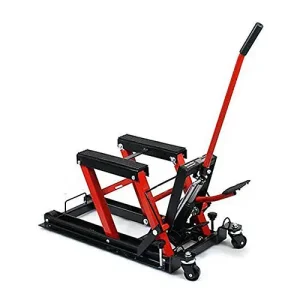
Discover specialized multi-scissor platforms, high-reach scissor elevators, motorcycle service lifts, and stainless steel sanitary lift tables designed for custom material handling workflows.