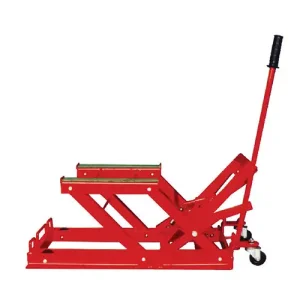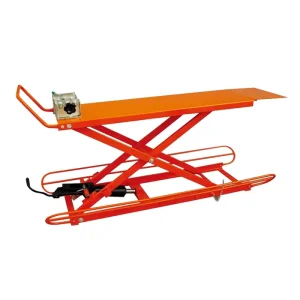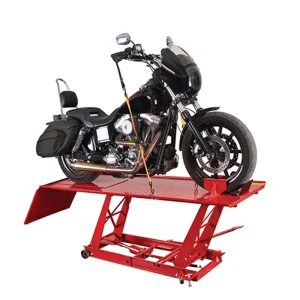
Explore our industrial-grade double scissors, multi-scissors, and specialized lifting solutions built to EN1570 and ISO9001 standards.
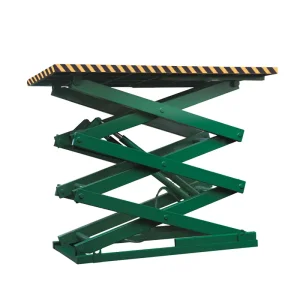
An engineering analysis of modern industrial lift platform design, safety standards, and operational efficiency gains in global logistics.
In modern industrial engineering, logistics management, and automated manufacturing, the strategic deployment of hydraulic scissor lift tables serves as a fundamental pillar for operational safety and high-throughput productivity. As manufacturing ecosystems pivot toward smart automation, Industry 4.0 integration, and stringent ergonomic mandates, procurement executives are re-evaluating the role of hydraulic lifting infrastructure within their facilities.
Industrial scissor lift platforms eliminate repetitive manual lifting hazards, mitigate musculoskeletal disorders (MSDs) among assembly technicians, and seamlessly bridge vertical elevation gaps across automated assembly lines, processing stations, and loading bay terminals. Engineering a high-reliability lift table requires rigorous structural dynamics calculations, finite element analysis (FEA) of scissor arm stresses, and advanced hydraulic control circuit integration.
Key Engineering Insight: According to global occupational health data, implementing ergonomically adjustable hydraulic lift tables reduces workplace lifting-related injuries by up to 62% while accelerating line-item handling speed by over 28% in continuous-duty manufacturing environments.
As a premiere manufacturer and global exporter, Sinolift manufactures every hydraulic scissor lift table according to strictly audited global standards, including JB/T 9229.1(2/3)-1999, ISO9001 quality assurance, and European CE Machinery Directives (EN 1570-1). Whether catering to ultra-clean pharmaceutical processing cleanrooms requiring 304/316 stainless steel fabrication or heavy-duty automotive chassis assembly lines demanding multi-ton load capacities, modern lifting machinery must maintain zero-tolerance structural integrity under intense cyclic fatigue.
| Series Category | Structural Configuration | Rated Capacity Range | Max Elevation Height | Core Application Domain |
|---|---|---|---|---|
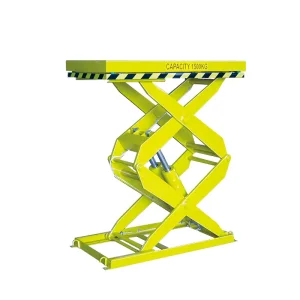
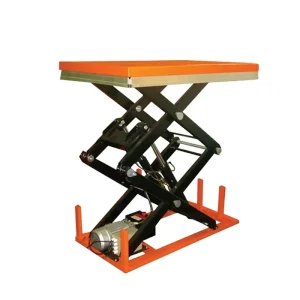
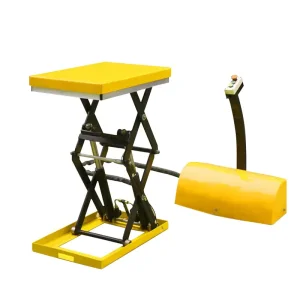
| SLG / HD Series | Double / Multi-Scissor Vertical Stack | 500 kg – 4,000 kg | Up to 4,200 mm | High-rise tier stacking, mezzanine vertical freight transport, multi-level conveyor bridging. |
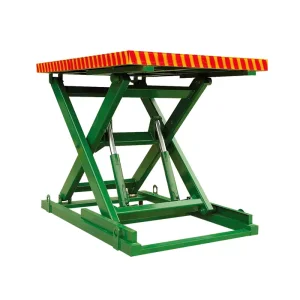
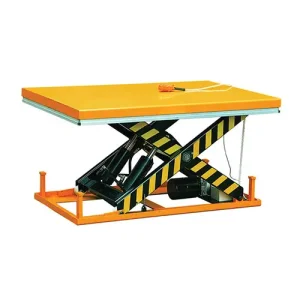
| SJG Series | Heavy Duty Single Scissor Mechanism | 1,000 kg – 10,000 kg+ | 500 mm – 2,500 mm | Automotive manufacturing lines, heavy machinery assembly, loading dock leveling. |
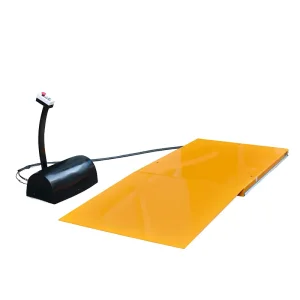
| HY / HW / HE Series | Low Profile / E-Type Ergonomic Platform | 500 kg – 2,000 kg | 800 mm – 1,050 mm | Pallet truck direct loading, cleanroom packing lines, space-constrained workstations. |
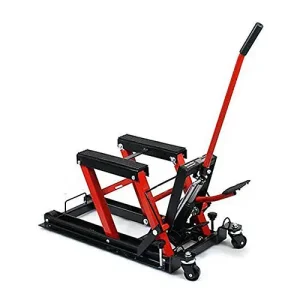
| ET / MC Series | Specialized Pneumatic / Hydraulic Lift | 300 kg – 1,000 kg | 1,000 mm – 1,200 mm | Automotive/motorcycle maintenance, precision powertrain repair, workshop ergonomics. |
| 304 Stainless Series | Corrosion-Resistant Sanitary Design | 500 kg – 2,000 kg | 1,000 mm – 1,700 mm | Pharmaceutical production, food & beverage processing, harsh chemical facilities. |
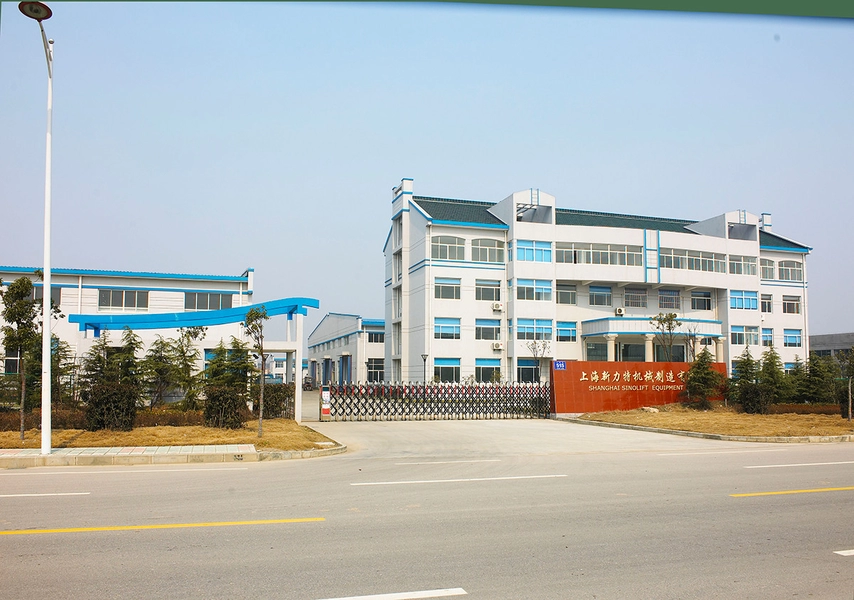
Robust manufacturing infrastructure driving material handling performance across 120+ international markets.
Engineering tailored hydraulic lift systems to address evolving global supply chain demands and safety standards.
Modern automated smart warehouses demand low-profile lift tables and stationary platform elevators that communicate seamlessly with Programmable Logic Controllers (PLCs) and Automated Guided Vehicles (AGVs). Sinolift scissor platforms feature customized limit switches, photoelectric sensor arrays, and remote hydraulic power packs equipped with digital bus interfaces for full system synchronization.
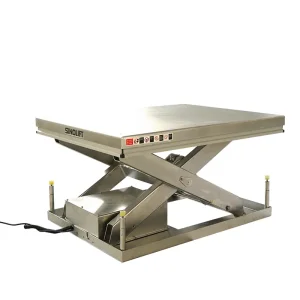
In chemical processing plants and pharmaceutical manufacturing facilities, standard carbon steel lifting equipment presents contamination and explosion risks. Our 304 Grade Stainless Steel Electric Scissor Lift Tables deliver anti-corrosive performance, IP65 waterproof control boxes, and ATEX-certified explosion-proof motors tailored for volatile atmospheres.
Where floor space is at a premium, vertical logistics necessitate multi-scissor mechanics (SLG Series). By engineering synchronized double, triple, and quadruple scissor stacks, Sinolift delivers maximum vertical travel stroke while keeping the footprint compact, offering structural stability under off-center dynamic loads.
Sinolift is one of the leading material handling equipment manufacturers in China and a key player in the global hydraulic industry. Our headquarters, Shanghai Sinolift Mechanical and Electrical Equipment Co., Ltd., located in the prestigious Nanhui Industry Park, was established in 2005. To support accelerating global demand, in 2017 we expanded operations with a state-of-the-art third production plant in Hangzhou City, Zhejiang Province.
Our expansive manufacturing hubs specialize in high-precision hydraulic handling equipment including Dock Equipment, Tail Lifts, Dock Levelers, Heavy-Duty Lift Tables, and Aerial Access Lifts. All Sinolift engineering assemblies are constructed using premium structural steel grades, high-pressure hydraulic cylinders, and top-tier Italian or Swiss hydraulic power units, guaranteeing unmatched dependability.
Every single product is manufactured strictly according to JB/T 9229.1(2/3)-1999 standards. Our facilities hold verified ISO9001, CCMA, CE, and global compliance certifications. Exporting across Europe, the Americas, the Middle East, and Southeast Asia, Sinolift maintains a vast inventory of over 2,000 ready-to-ship units to ensure rapid international fulfillment.
Having over 5,000 successful custom lift table installations worldwide provides us with the in-depth engineering experience and mechanical knowledge that we pass on to every project we execute.
At SINOLIFT, we take pride in maintaining the widest hydraulic handling product line. We ensure a baseline stock of 2,000+ completed units—guaranteeing rapid dispatch and minimal downtime for global clients.
Our engineering options guarantee that we can cater to all material handling needs, regardless of site space constraints or complex operational parameters. Sinolift delivers exact tailored hydraulic solutions.
Adhering strictly to global safety codes and international machinery directives for frictionless market import.
All Sinolift stationary and mobile lift tables destined for the European Economic Area are built in compliance with EN 1570-1 (Safety requirements for lifting tables). Key features include perimeter safety trip bars (anti-pinch protection) on all four sides of the platform to instantly arrest downward motion upon contacting an obstruction.
For our North American clientele, platforms conform to ANSI MH29.1 safety specifications. Integrated features encompass velocity fuses on hydraulic cylinders to prevent platform free-fall in the unlikely event of hose rupture, overload protection bypass valves, and maintenance safety bars for servicing.
We provide full power pack localization across global electrical standards: 110V/220V Single-Phase (60Hz) for Americas, 380V/415V Three-Phase (50Hz/60Hz) for Europe and Asia. Control cabinets are equipped with IP54/IP65 ingress protection ratings for indoor and outdoor installations alike.
Pioneering the next era of smart, eco-efficient, and predictive-maintenance hydraulic lifting systems.
As global industries transition toward carbon-neutral operations and fully autonomous supply chains, Sinolift’s R&D team in Shanghai and Hangzhou is driving innovation across four core technological vectors:
Integrating smart sensors into hydraulic blocks to continuously monitor fluid pressure, temperature, oil viscosity, and scissor arm cycle counts. Cloud-connected modules alert plant managers before hydraulic seal degradation occurs, achieving zero unplanned line stops.
Developing hydraulic descent kinetic energy recovery systems. By capturing pressurized fluid energy during heavy load lower cycles, next-generation Sinolift tables reduce total energy consumption by up to 35% in high-frequency logistics hubs.
Advancing low-profile scissor mechanics (HE / E-type) to achieve collapsed heights as low as 80mm without sacrificing lift capacity, eliminating the cost and structural modification required for floor pit excavation.
Explore our specialized electric elevators, low profile lift platforms, and motorcycle hydraulic lifts.
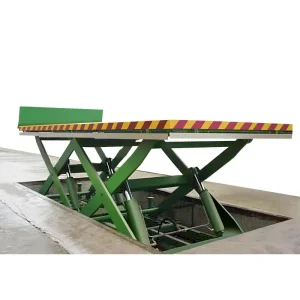
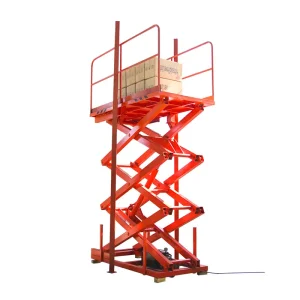
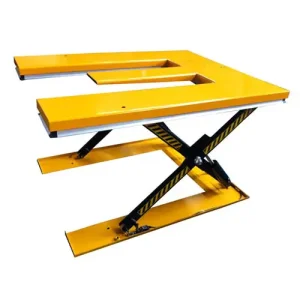
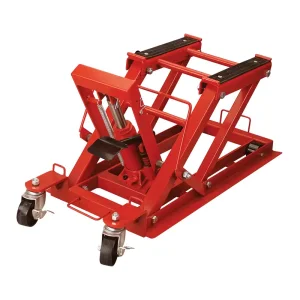
Expert answers to common engineering, customization, maintenance, and purchasing queries.
The decision relies primarily on the ratio of required vertical travel distance (stroke) to platform length. Single scissor lift tables (SJG Series) are ideal for heavy capacity loads requiring low-to-medium vertical elevation. When high vertical displacement is required but floor space constraints prohibit a long platform, Multi-Scissor (SLG Series) stack scissor arms vertically to achieve significantly higher maximum heights without increasing the table footprint.
Yes. Sinolift offers complete OEM engineering flexibility. Customization parameters include non-standard platform dimensions, custom stroke heights, heavy-duty capacity ratings (up to 20 metric tons), integrated powered roller conveyors, rotating turntable tops, bellows safety skirts, explosion-proof electrics, and stainless steel fabrication (Grade 304 or 316).
Safety is integral to our engineering design. Standard safety features include: (1) Aluminum safety perimeter trip frame underneath the platform to halt descent upon obstruction; (2) Hydraulic velocity fuses inside cylinders to prevent platform drop during pressure loss; (3) Internal pressure relief valves to prevent lifting beyond rated capacity; (4) Mechanical safety maintenance chocks for secure servicing.
Low-profile lift tables lower down to ultra-thin profiles (80mm–105mm). This allows operator loading via standard pallet jacks directly onto the platform via a small access ramp, completely eliminating the need for civil pit excavation work in rented facilities or upper-floor industrial floors.
Routine maintenance ensures a service life exceeding 10 years. We recommend monthly inspection of hydraulic fluid levels, checking hose connections for abrasion, greasing scissor pivot pins and roller bearings, and inspecting electrical safety limit switches. Hydraulic oil should be flushed and replaced annually depending on duty cycle intensity.