
Choosing among China’s top Lift Cart manufacturers requires more than comparing prices or catalog photographs. A reliable supplier should demonstrate engineering experience, stable production, and clear quality controls. Buyers should examine load capacity, lifting height, platform dimensions, battery performance, and control design. These details affect daily safety and productivity.
This guide introduces leading Chinese manufacturers and explains how their strengths differ. Some focus on hydraulic lift carts for warehouses. Others develop electric models for factories, hospitals, and retail operations. A serious evaluation should include factory capability, product testing, spare-parts support, and delivery performance. Ask for test reports and relevant certifications. Request references from users with similar working conditions.
Real experience matters here. A cart that performs well on a smooth showroom floor may struggle on uneven concrete. Noise, turning radius, charging time, and emergency lowering also deserve attention. Small details can become expensive problems. Not every advertised specification tells the full story.
No ranking is perfect. Manufacturer data may be selective, and independent verification is sometimes limited. Therefore, readers should compare technical documents, inspect samples, and clarify warranty terms before purchasing. This overview aims to provide a practical starting point, not a final decision. The best supplier is the one that matches your workload, environment, budget, and long-term service expectations.
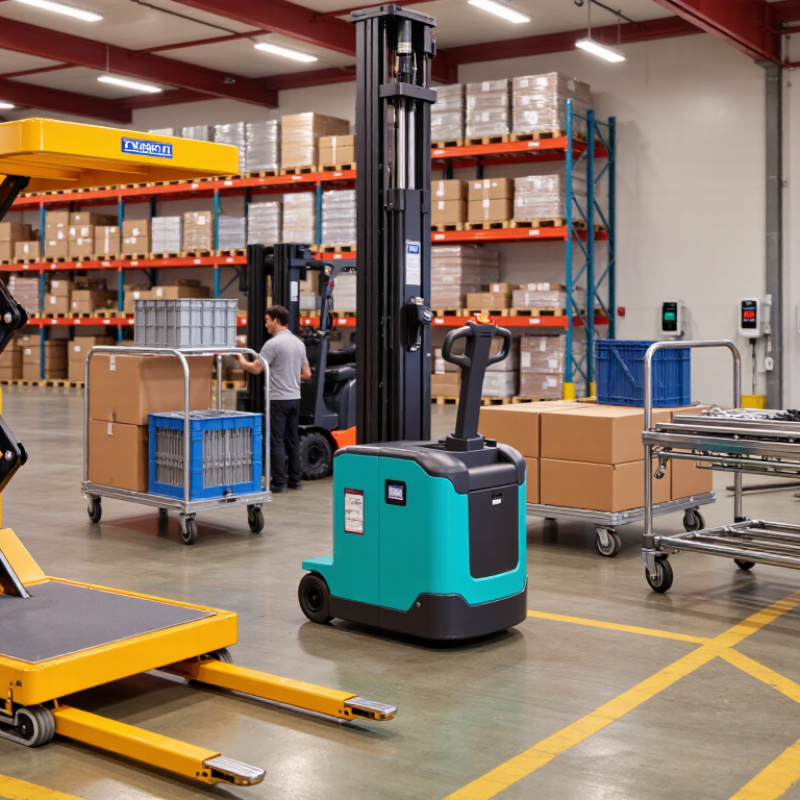
When comparing China lift cart manufacturers, start with the machine’s definition, not its catalog photograph. A lift cart combines a platform or forks with a manual, hydraulic, or electric lifting system. Some models move by hand. Others use powered traction. That difference changes the safety review.
Load rating is not simply the largest printed number. It depends on load center, lift height, platform position, and floor conditions. A cart rated for 1,000 kilograms near the floor may safely carry less at maximum height. In practical inspections, I check the rating plate, load chart, weld quality, brake response, and emergency lowering function. The declared capacity should match real operating conditions, not an ideal factory test. This is where buyers sometimes need to pause.
Lift height also needs precise wording. Confirm whether the supplier means fork height, platform height, or working height. Measure from the floor to the highest usable supporting surface. Review mast deflection, visibility, stability, and clearance under overhead structures. A taller lift is not automatically a better lift cart.
ISO 3691-5 is especially relevant to pedestrian-propelled industrial trucks, but its applicability depends on the cart’s design and functions. Ask manufacturers for conformity documentation, risk assessments, operating instructions, and test records. ISO alignment should support engineering evidence, not replace it. A reliable supplier explains limitations clearly and provides spare-part information, training guidance, and traceable quality checks. Still, documents cannot reveal every weakness; an on-site trial remains valuable.
A reliable ranking should separate lifting capacity from factory capacity. A lift cart may handle 500 kilograms, while the manufacturer produces 2,000 units annually. These figures measure different strengths. Numbers need context.
Start by checking rated load, lifting height, platform size, and duty cycle. Ask for test records, serialised inspection reports, and recent production samples. A serious factory should explain how capacity changes under repeated use. Request monthly output for the past twelve months, not only the highest reported month. Compare welding stations, assembly workers, testing equipment, and quality-control checkpoints. A small showroom proves little.
Export performance adds another layer. Review shipment volumes, destination regions, repeat-order percentages, and average lead times. Examine packing photographs, export documents, spare-parts procedures, and warranty response records. Public trade data can support the review, but it may contain delays or classification errors. Proof matters.
A practical score can assign 35% to verified product capacity, 35% to consistent annual output, and 30% to export reliability. Normalize each supplier against the same criteria. Do not reward volume alone. A large output figure may hide inconsistent quality, while a modest exporter may provide stronger engineering support. Factory audits, video inspections, and independent load testing improve confidence. Still, every ranking has weaknesses. Data changes, and some suppliers report capacity optimistically. That gap matters. Recheck key figures before signing a purchase agreement.
The top China lift cart manufacturers should be judged by verified compliance, not attractive catalogs or low prices. EN 1757-1 is a useful reference for pedestrian-controlled industrial trucks, where applicable to the cart design. Ask for test reports covering stability, braking, lifting limits, and emergency controls. Review the actual model, not a similar product.
CE compliance also requires careful checking. CE is a manufacturer’s declaration of conformity, supported by risk assessment and technical documentation. A reliable supplier should explain applicable directives, provide a Declaration of Conformity, and show clear product labels. Inspectors should also check guards, lowering controls, warning signs, and the user manual. Small details matter.
ISO 9001 indicates a quality management system, not automatic product safety. Request the certificate scope, issuing body, validity dates, and production-site address. Strong manufacturers can usually provide traceable serial numbers, inspection records, calibration files, and corrective-action reports. Ask how failed load tests are handled. The answer often reveals more than a brochure.
A factory visit adds useful evidence. Watch a sample cart being assembled and tested. Check weld consistency, hydraulic leaks, wheel alignment, and finish quality. No checklist is perfect. A supplier may meet paperwork requirements yet miss a small label or maintenance instruction. Independent inspection before shipment remains sensible, especially for repeated orders and changing cart designs.
When comparing China lift cart manufacturers, focus on how their 500–2,000 kg models perform in real workspaces. A 500 kg cart may suit warehouses with narrow aisles and frequent manual positioning. Models near 1,000 kg often balance capacity, maneuverability, and battery demand. At 2,000 kg, frame stiffness, wheel design, braking control, and lift stability become more important than headline capacity.
Ask suppliers for load charts, lifting speed, turning radius, battery specifications, and test records. A reliable manufacturer should explain capacity at different load centers, not only advertise the maximum figure. Test it loaded. Observe whether the platform lowers smoothly, whether the controls remain responsive, and whether the wheels slip on concrete. In my experience, small details matter: weld consistency, protected wiring, accessible charging points, and clear service instructions can affect downtime more than a low purchase price.
Warranty terms deserve equal attention. Many suppliers offer 12 to 24 months for the main structure, while batteries, chargers, seals, and wear parts may receive shorter coverage. Confirm whether labor, replacement shipping, and remote diagnosis are included. Some warranties begin at shipment, not installation, which can reduce practical protection. That clause is easy to miss. Also request maintenance schedules and spare-parts availability. A supplier may appear technically strong, yet respond slowly after delivery. I would compare written commitments with factory inspection results, customer references, and a sample machine before placing a large order. A perfect comparison is difficult because operating conditions vary. That limitation should remain visible.
A reliable China lift cart manufacturer should provide verifiable evidence, not polished brochures. The 2023 ISO Survey recorded more than 1.2 million ISO 9001 certificates worldwide. However, certification alone does not prove lift-cart quality. Request the certificate number, issuing body, scope, and expiry date. Confirm that the scope covers manufacturing, not only trading activities.
Review three years of production records, inspection reports, and export documentation. Match model numbers, rated loads, platform dimensions, and hydraulic components across every document. Ask for serial-number traceability and batch-based load-test results. A serious factory should show tests at rated capacity, overload limits, brake performance, and emergency lowering. The applicable standard must also be identified clearly. Vague references are warning signs.
UN Comtrade data can help compare a supplier’s claimed export history with recorded trade activity. Customs records should align with product categories, destination markets, and shipment volumes. Check the manufacturer’s legal registration, registered capital, factory address, and ownership through official Chinese business databases. Visit the production floor if possible. Count welding stations, inspection tools, finished units, and spare-part shelves. Numbers can be checked.
Independent inspection remains valuable. A third-party auditor can verify machinery, worker training, calibration records, and corrective actions. Request recent nonconformity reports, not only perfect samples. That detail may feel uncomfortable, but factories without problems on paper may simply hide them. Payment terms, warranty response times, and replacement-part availability should be documented before any purchase order. A low price is not due-diligence data.
Confirm that the standard applies to the specific lift cart design. Request test reports covering stability, braking, lifting limits, and emergency controls. Review the exact model number. Paperwork is not proof.
Request a Declaration of Conformity, risk assessment, technical documents, product labels, and a clear user manual. Check guards, lowering controls, warning signs, and maintenance instructions. Small details matter.
No. ISO 9001 describes a quality management system, not automatic product safety. Verify the certificate scope, issuing body, validity dates, and production-site address. Details matter.
Ask for three years of production records, inspection reports, and export documents. Match model numbers, rated loads, platform sizes, and hydraulic components. Keep the comparisons practical.
Request batch-based test results at rated capacity and overload limits. Also review braking, emergency lowering, and lifting performance. Failed tests should have documented corrective actions. An honest answer may be imperfect.
Check welding consistency, hydraulic leaks, wheel alignment, and surface finish. Count welding stations, inspection tools, completed carts, and spare-part shelves. Numbers can be checked.
Verify legal registration, registered capital, factory address, ownership, and certificate details through official records. Compare claimed export activity with customs data and shipment volumes. A polished brochure proves little.
Use independent inspection before shipment, especially for repeated orders or changing designs. Inspect machinery, worker training, calibration records, serial numbers, and corrective actions. No checklist is perfect.
This guide explains how to evaluate China Lift Cart manufacturers through practical and verifiable criteria. It begins by defining lift carts according to load capacity, lifting height, operating design, and relevant safety principles such as ISO 3691-5. It then presents a framework for comparing manufacturers by production capacity, annual output, export experience, and ability to supply models ranging from 500 to 2,000 kg.
The article also examines whether suppliers can support requirements related to EN 1757-1, CE conformity, and ISO 9001 quality management. Warranty coverage, replacement parts, service response, and customization options are considered alongside product performance and pricing. Finally, it outlines the due-diligence information buyers should request, including factory registration details, test reports, inspection records, certifications, reference projects, production photographs, and contract terms. This approach helps purchasers identify reliable suppliers and make informed decisions based on evidence rather than marketing claims.
