
Choosing the right Electric Lift Table is not a simple matter of comparing motor power and platform size. Global buyers must assess load stability, lifting speed, duty cycle, control design, maintenance access, and regional service support. A table that performs smoothly in a clean warehouse may struggle in a dusty workshop. Small differences matter.
Industry evidence supports this careful approach. Liberty Mutual’s Workplace Safety Index consistently places overexertion among the most expensive workplace injury categories in the United States. EU-OSHA reports also identify manual handling and awkward postures as persistent contributors to work-related musculoskeletal disorders. These findings do not prove that every lift table improves safety. They show why correct equipment selection and operator training deserve attention.
According to Grand View Research, automation and material-handling equipment demand continues to expand as manufacturers pursue higher productivity and safer workflows. Yet market growth can create confusion. Specifications are not always comparable across suppliers. Some published capacity figures may describe static loads, not repeated operating loads. That distinction is easy to miss.
Dr. Alan Hedge, a respected ergonomics researcher, expressed the central principle clearly: “Design the job to fit the worker, not the worker to fit the job.” This idea guides our review of the top 10 Electric Lift Table options for global buyers. We examine practical performance, not only impressive brochures. Expect useful comparisons, but not perfect answers. Site conditions, operator habits, voltage standards, and after-sales support can change the final decision.
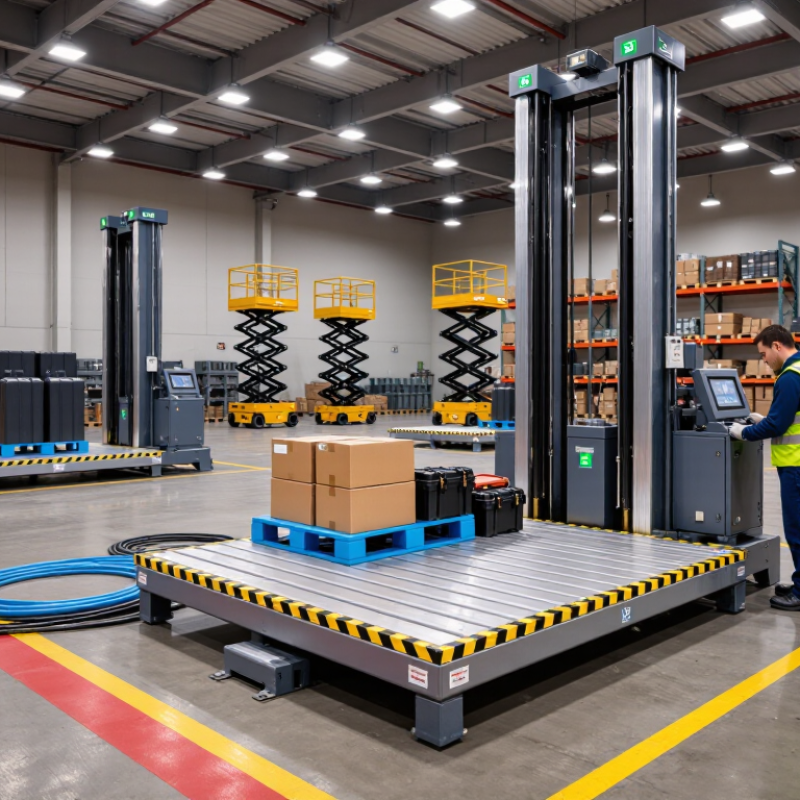
Electric lift tables raise and lower loads with powered mechanical systems. Most use an electric motor, hydraulic pump, and scissor legs. When an operator presses the control, the motor drives hydraulic pressure through a cylinder. The scissor mechanism then opens or closes smoothly. Some models use screw drives instead of hydraulics. Height sensors and limit switches help prevent overtravel. A stable platform supports pallets, bins, tools, or workers’ materials.
In practical warehouse checks, load placement matters as much as rated capacity. A box near one edge can create twisting forces and reduce stability.
Operators should inspect hoses, cables, emergency stops, and platform movement before each shift. Floor condition matters too. Uneven concrete can cause vibration and premature wear.
A table may lift correctly during testing, yet perform poorly when overloaded repeatedly. That detail is easy to miss. Specifications should match load weight, platform size, lifting height, cycle frequency, and local electrical requirements. Guarding and pinch-point protection also deserve careful review.
Tips: Keep the load centered and below the stated capacity. Use visible warning labels near controls. Test the emergency stop regularly. Record unusual noise, slow lifting, or fluid leakage. Do not assume a larger platform means greater safety. A trained technician should handle electrical or hydraulic repairs. Good maintenance is not glamorous, but it prevents expensive downtime and avoidable injuries.
Top 10 Electric Lift Tables for Global Buyers?
Key Criteria for Comparing Electric Lift Tables Worldwide
Global buyers should compare more than lifting height and advertised capacity. In field evaluations, ask whether the table can lift its rated load repeatedly. Check stability when a pallet sits slightly off-center. Platform size, lowered height, stroke length, and lifting speed affect daily productivity. A compact table may fit a narrow aisle, yet offer limited working space. That trade-off is easy to miss.
Motor performance also matters. Compare duty cycles, noise levels, battery options, and emergency lowering systems. Confirm whether controls are simple for operators wearing gloves. Construction quality deserves close inspection around hinges, rollers, welds, and protective guards. Outdoor buyers should examine corrosion resistance, temperature tolerance, and enclosure protection. Local electrical requirements and conformity documents must be verified before purchase. Do not rely only on a supplier’s capacity chart. Test data, maintenance instructions, spare-part access, and service response provide stronger evidence. A low-cost table can become expensive after repeated downtime. That assumption deserves scrutiny.
Tips: Request a video of a loaded lifting cycle. Measure your actual pallet dimensions. Ask for noise and duty-cycle figures. Compare warranty coverage across regions. Keep a small allowance for uneven floors, voltage differences, and operator habits. Even careful comparisons can miss a real-site problem. A trial installation may reveal more than a polished specification sheet.
| Rank | Electric Lift Table Profile | Rated Capacity | Lowered Height | Raised Height | Typical Platform Size | Typical Lift Time | Electrical Configuration | Mobility and Base | Key Safety Features | Best Global Application |
|---|---|---|---|---|---|---|---|---|---|---|
| 1 | Heavy-Duty Double-Scissor Table | 2,000–4,000 kg | 600–900 mm | 1,500–2,500 mm | 1,300 × 2,200 mm to 2,000 × 4,000 mm | 25–45 seconds | Three-phase, commonly 380–415 V / 50 Hz; other voltages available | Fixed floor-mounted base; optional ramps and guarding | Mechanical maintenance locks, emergency stop, overload valve, toe guards | Automotive, metal fabrication, machinery loading and pallet transfer |
| 2 | Standard Single-Scissor Lift Table | 500–2,000 kg | 300–500 mm | 900–1,600 mm | 800 × 1,200 mm to 1,500 × 2,000 mm | 15–35 seconds | Single-phase or three-phase electric motor; 220–240 V and 380–415 V versions are common | Fixed or mobile frame; castors generally reduce rated capacity | Overload protection, emergency stop, safety perimeter, hose-burst protection | Warehouses, production lines, pallet handling and ergonomic workstations |
| 3 | Low-Profile Pallet Lift Table | 500–1,500 kg | 80–160 mm | 700–1,200 mm | 800 × 1,200 mm to 1,200 × 1,600 mm | 15–30 seconds | Single-phase electric hydraulic power unit; 220–240 V is widely used | Floor-mounted; loading ramp often included | Anti-trap clearance, maintenance bar, overload relief, non-return valve | Distribution centers and pallet loading where floor recesses are unavailable |
| 4 | Mobile Electric Scissor Lift Table | 150–800 kg | 350–700 mm | 900–1,500 mm | 500 × 900 mm to 900 × 1,500 mm | 15–30 seconds | Rechargeable battery, typically 12 V or 24 V DC, with onboard charger | Two fixed and two swivel castors; wheel brakes required for stationary use | Emergency stop, brake-equipped castors, overload protection, battery indicator | Flexible material handling, maintenance areas and multi-station assembly |
| 5 | Stainless-Steel Hygienic Lift Table | 300–1,000 kg | 250–500 mm | 800–1,300 mm | 700 × 1,000 mm to 1,200 × 1,800 mm | 20–40 seconds | Electric hydraulic system; washdown-compatible controls and protected motor options | Fixed or mobile stainless-steel frame; sealed wheels available | Corrosion-resistant surfaces, sealed controls, rounded edges, maintenance locks | Food processing, beverage production, pharmaceutical and clean manufacturing |
| 6 | U-Shaped Pallet Lift Table | 600–1,500 kg | 80–120 mm | 700–1,000 mm | Approximately 800 × 1,200 mm to 1,200 × 1,600 mm | 15–25 seconds | Single-phase electro-hydraulic power unit; 220–240 V is common | Floor-mounted with three-sided pallet entry | Safety edge, emergency stop, overload valve, mechanical service support | Pallet handling, packaging lines and operations without a loading pit |
| 7 | Low-Voltage Battery Lift Table | 300–1,000 kg | 350–600 mm | 900–1,400 mm | 600 × 1,000 mm to 1,000 × 1,600 mm | 18–35 seconds | 12 V or 24 V rechargeable battery system; charger input varies by destination market | Mobile or fixed base; suitable for areas without nearby mains power | Battery over-discharge protection, emergency stop, overload protection, wheel brakes | Service vehicles, temporary workstations and export applications with varied power supply |
| 8 | Inverted or Tandem-Scissor Lift Table | 1,000–3,000 kg | 700–1,000 mm | 1,800–3,500 mm | 1,200 × 2,000 mm to 2,000 × 4,000 mm | 30–60 seconds | Three-phase electro-hydraulic drive; voltage and frequency selected for local grid standards | Fixed installation with reinforced foundation requirements | Synchronized lifting, mechanical locks, guarded scissor zones, overload protection | Large machinery positioning, vehicle production and industrial platforms |
| 9 | Turntable-Top Electric Lift Table | 300–1,000 kg | 300–600 mm | 900–1,400 mm | 800 × 1,200 mm to 1,500 × 2,000 mm | 20–40 seconds | Single-phase or three-phase electric hydraulic drive | Usually fixed; powered or manual rotation options may be specified | Anti-rotation stop, perimeter safety edge, overload relief, maintenance support | Assembly, welding, packing and ergonomic access around large workpieces |
| 10 | Compact Ergonomic Workstation Lift | 100–500 kg | 250–450 mm | 700–1,100 mm | 500 × 800 mm to 800 × 1,200 mm | 10–25 seconds | 24 V DC actuator or compact electro-hydraulic unit | Mobile or fixed pedestal; compact footprint for limited floor space | Limit switches, emergency stop, anti-pinch design, overload protection | Light assembly, laboratories, retail backrooms and accessible workstations |
| The specifications above are representative market-reference ranges for electrically powered lift tables. Actual capacity, dimensions, lifting speed, duty cycle, ingress protection, local voltage, guarding and conformity requirements must be confirmed against the final technical drawing and the regulations of the destination country. | ||||||||||
Top 10 Electric Lift Tables for Different Industrial Applications
Electric lift tables support many work environments, but one design rarely fits every task. For assembly lines, choose stable platforms with precise height control. Scissor tables suit pallet handling, packaging, and warehouse picking. Low-profile models help factories load heavy parts safely. Stainless-steel tables fit food processing and pharmaceutical areas. Mobile tables improve maintenance work and tool positioning. In hospitals, quiet operation and smooth movement matter more than maximum capacity.
The remaining applications include automotive production, battery plants, aircraft maintenance, retail stockrooms, and ergonomic workstations. The International Federation of Robotics reported 541,302 industrial robot installations worldwide in 2023. This growth increases the need for accurate material positioning near automated cells. The International Energy Agency also reported more than 14 million electric cars sold in 2023. Battery and vehicle factories therefore need lift equipment with strong duty cycles and reliable controls. Still, a ranking can mislead. Floor quality, shift length, and operator habits often change the best choice.
Tips: Check rated load, platform size, lifting speed, cycle frequency, and emergency lowering. Measure the lowest height carefully. A table that looks powerful may perform poorly in a narrow aisle. Request test data under real loads, not empty-platform demonstrations. Review local safety requirements with a qualified engineer before installation.
Top 10 Electric Lift Tables for Global Buyers?
Safety, Capacity, Mobility, and Power Requirements
Choosing an electric lift table starts with the working environment, not the catalog photograph. Check emergency-stop access, guarded pinch points, anti-slip surfaces, and overload protection. Limit switches should stop the platform smoothly at its travel limits. A practical inspection also checks whether controls remain clear when operators wear gloves. Small details matter.
Rated capacity must match the load’s weight, size, and center of gravity. A 500-kilogram load can become unstable when placed near the platform edge. Consider lifting frequency, load distribution, and the table’s lowest height. Repeated cycles demand stronger components and reliable thermal protection. Capacity figures alone can mislead buyers.
Mobility changes performance. Swivel casters, wheel brakes, handle design, and floor condition affect daily handling. Narrow aisles may require a smaller platform, while ramps need extra traction and controlled movement. Power requirements also vary across regions. Confirm voltage, charging time, battery type, duty cycle, and plug compatibility before ordering. Indoor models may need different protection from dusty or damp workplaces. I still see buyers choosing maximum height first, then discovering poor battery endurance or difficult steering. A lower, steadier model may work better. Crew training and maintenance access deserve equal attention, although they are often overlooked.
Safety, capacity, mobility, and power requirement comparison based on common industrial specification ranges
Choosing an electric lift table requires more than comparing lifting capacity and price. Start with the real load, including tools, containers, and uneven weight distribution. A 500-kilogram rating may not suit a load placed far from the platform center. Measure the lowest and highest working heights, then check whether the table fits through doors, elevators, and shipping crates.
Voltage and frequency matter across markets. Confirm the available power supply before ordering, such as 230 volts, 50 hertz, or 120 volts, 60 hertz. Ask for tested safety features, including emergency stops, overload protection, mechanical supports, and guarded moving parts. The control pendant should remain usable when operators wear gloves. Small details matter.
Check the duty cycle carefully. A table used every few minutes needs stronger thermal protection than one used occasionally. Review platform dimensions, wheel options, brake strength, noise levels, and corrosion resistance for humid warehouses. Request installation instructions, wiring diagrams, spare-parts support, and clear warranty terms in writing. Independent inspection records can improve confidence, but documents alone are not enough. A practical video test with your actual load may reveal unstable movement or slow lowering. I have seen specifications look impressive until real operating conditions exposed the gaps. Leave room for that possibility.
It is a powered platform that raises and lowers pallets, bins, tools, or materials. Most models use an electric motor, hydraulic pump, cylinder, and scissor legs. Some use screw drives instead. Not every design suits every workplace.
Pressing the control starts the motor and creates movement through hydraulic pressure or a screw drive. The scissor legs open or close to change platform height. Sensors and limit switches help prevent excessive travel. Movement should remain smooth and controlled.
Capacity depends on the model, platform size, lifting height, and duty cycle. Keep the load centered and below the stated limit. A box near one edge can create twisting forces. Rated capacity alone is not enough.
Place pallets or boxes near the platform center. Keep heavy items stable and evenly distributed. Do not assume a larger platform provides greater safety. That assumption can fail.
Check hoses, cables, emergency stops, warning labels, and platform movement. Look for unusual noise, slow lifting, or fluid leakage. Inspect the floor for cracks, slopes, or uneven concrete. Small defects can become expensive problems.
Compare lowered height, platform dimensions, stroke length, lifting speed, noise, and duty cycle. Review emergency lowering systems and glove-friendly controls. Outdoor use may require corrosion resistance and stronger enclosure protection. A compact model may fit an aisle but provide less working space.
Scissor tables often support pallet handling, packaging, and warehouse picking. Low-profile models suit heavy-part loading. Mobile tables help with maintenance and tool positioning. Quiet, smooth models may suit healthcare environments. The best choice depends on real site conditions.
Request loaded-cycle videos and test data using realistic pallet dimensions. Check repeated lifting performance, not only an empty-platform demonstration. Review maintenance instructions, spare-part access, warranty coverage, and service response. A trial installation may reveal problems earlier.
This guide introduces the Electric Lift Table as a practical material-handling solution designed to raise, lower, position, and transfer loads with controlled motorized movement. It explains how electric motors, lifting mechanisms, platforms, controls, and safety systems work together to support efficient operations in warehouses, factories, workshops, logistics centers, and other industrial environments. The article also outlines the main criteria global buyers should compare, including lifting capacity, platform size, height range, lifting speed, stability, mobility, power supply, control options, maintenance needs, and workplace safety features.
The selection includes ten types of electric lift tables suited to different applications, from compact mobile models to heavy-duty platforms for demanding production tasks. Buyers will learn how to evaluate load requirements, operating conditions, available space, local power standards, movement frequency, and safety expectations before making a decision. By matching equipment specifications with practical workplace needs, international purchasers can choose a reliable, efficient, and suitable lifting solution for long-term use.
