Choosing the right Hydraulic Table Cart is not simply a matter of comparing lifting heights or wheel sizes. It requires understanding the worksite, load behavior, operator movement, and maintenance conditions. A cart used beside a packing bench may need smooth, frequent adjustments. A warehouse model may require stronger platforms, longer travel, and better protection against floor impact.
Dr. Paul A. Myerson, a recognized supply-chain and material-handling expert, has said, “Good material handling begins with matching the tool to the work.” That principle guides this review of the top ten types of Hydraulic Table Cart. Each design solves a different operational problem. Scissor lift carts support vertical positioning. Low-profile carts improve access beneath pallets. Stainless-steel versions suit cleaner environments, while tilt and platform models help workers handle awkward loads.
Small details matter. A leaking seal can stop a busy station. A narrow wheel may catch on a damaged floor. A short handle can make repeated steering uncomfortable. These issues are easy to overlook.
They should not be.
The ranking is useful, but not absolute. A cart that performs well in a distribution center may be unsuitable for a workshop or laboratory. Even published capacity ratings require careful interpretation. Load shape, center of gravity, lifting frequency, and floor quality can change real performance. This guide compares the ten major types through practical features, common applications, advantages, limitations, and selection considerations. It also leaves room for doubt, because no Hydraulic Table Cart is perfect for every task.
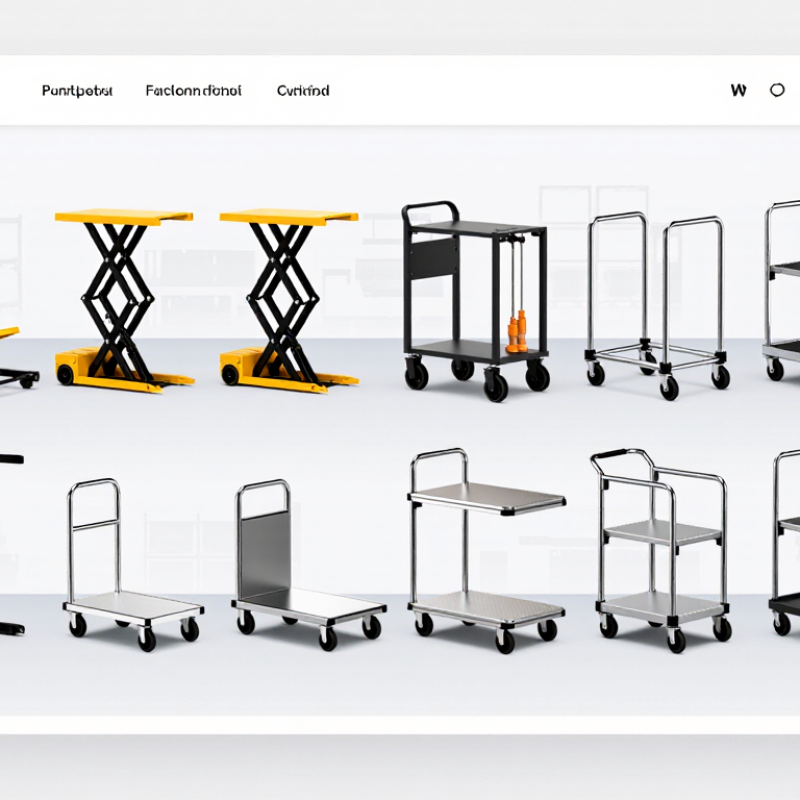
Hydraulic Table Carts by Lifting Mechanism and Operating Method
What Are the Top 10 Types of Hydraulic Table Carts?
Hydraulic table carts differ mainly by lifting mechanism and operating method. The ten common types are single-scissor foot-pump carts, double-scissor foot-pump carts, low-profile toe-pump carts, electric-hydraulic carts, battery-powered carts, air-over-hydraulic carts, manual push-around carts, stationary hydraulic tables, mobile hydraulic tables, and tilt-top hydraulic carts. These categories sometimes overlap. That is easy to miss.
A foot-pump cart suits short transfers and moderate loads. Its pedal gives direct control, but repeated pumping can tire operators. A double-scissor design reaches higher positions while reducing platform stability if the load is uneven.
Electric-hydraulic models support frequent lifting and smoother positioning. Battery-powered versions improve mobility, although charging time matters. Air-over-hydraulic carts can fit facilities with existing compressed-air systems.
Stationary tables work well at fixed workstations, while mobile tables reduce walking and repositioning. Tilt-top carts help present bins, but they need careful load placement.
MarketsandMarkets’ 2024 Material Handling Equipment report forecasts this market to grow at about 5.6% annually through 2029. That growth reflects wider demand for safer, more efficient material movement. Still, market reports combine many equipment categories, so the figure is not a direct hydraulic-cart forecast.
Tips:
Check rated capacity at the highest lift, not only at floor level. Measure aisle width with the operator present. Test wheel locks on a real floor. A cart that lifts smoothly may still steer poorly. Ask for maintenance records, hydraulic-leak checks, and documented load testing. Selection is rarely perfect; actual workflow should challenge the specification.
Manual Hydraulic Table Carts for Light-Duty Material Handling
Manual hydraulic table carts are practical tools for light-duty material handling in workshops, stockrooms, and small production areas. Among the ten common table-cart types, the single-scissor manual model is often the easiest to control. It uses a hand pump to raise a platform without electricity, reducing maintenance needs and operating noise.
A typical cart handles boxes, bins, fixtures, or small machine parts. Choose a rated capacity above the usual load, not just the maximum package weight. A 300-kilogram load may need a 500-kilogram cart when movement starts and stops frequently. Platform size also matters. Measure the largest item, then allow space for stable positioning. Four swivel casters improve turning, while brakes should lock the cart firmly on smooth floors.
Keep it simple.
In daily use, operators should pump with steady strokes and avoid standing beneath a raised platform. Check hydraulic oil, wheel condition, welds, and lowering controls before each shift. I have found that overloaded carts may still lift, but steering becomes awkward and unsafe. That is an easy mistake to make. A foot-operated model can save hand movement, while a low-profile cart helps load items from pallets. Double-scissor designs provide extra height, but they may feel less stable when fully raised. The best choice depends on load height, floor quality, travel distance, and operator strength. Specification sheets are useful, yet real handling trials often reveal problems that measurements miss.
Electric Hydraulic Table Carts for Frequent Lifting Operations
What Are the Top 10 Types of Hydraulic Table Carts?
Among the ten main hydraulic table cart types, electric hydraulic table carts suit frequent lifting operations best. They raise platforms with a battery-powered pump, reducing repeated hand pumping during busy shifts. Operators can move bins, fixtures, and tooling to a comfortable working height. In practice, a 500-kilogram load still needs careful positioning, even when the cart feels stable. Uneven floors, sharp turns, and poor battery maintenance can create avoidable hazards.
The U.S. Bureau of Labor Statistics recorded more than 140,000 nonfatal musculoskeletal disorder cases in its 2023 workplace injury data.
Hydraulic lifting equipment cannot remove every ergonomic risk, but it can reduce repeated bending and manual elevation. Electric models also provide smoother starts and more consistent platform height than many foot-pump designs. However, specifications can look better than real performance. Check duty cycles, battery capacity, wheel diameter, platform size, and rated load before purchasing. A cart used twenty times per hour may need different equipment than one used five times daily.
Tips:
Keep the load centered and below the rated capacity. Inspect wheels, hydraulic lines, controls, and emergency stops each shift. Charge batteries in the approved area. Test the cart with a light load first, because actual floor conditions often expose weaknesses that brochures miss. Training also matters; even a powerful cart becomes unsafe when operators rush.
Specialized Hydraulic Table Carts for Platforms, Pallets, and Rolls
What Are the Top 10 Types of Hydraulic Table Carts?
Specialized Hydraulic Table Carts for Platforms, Pallets, and Rolls
In active warehouses, hydraulic table carts solve different lifting problems. The top ten types include platform lift carts, pallet lift carts, roll handling carts, scissor lift carts, low-profile pallet carts, high-lift carts, straddle carts, stainless steel carts, mobile work tables, and tilting carts. Each design supports a specific load shape, height, or workflow.
Platform lift carts provide a stable surface for boxes, fixtures, and assembly parts. Pallet lift carts raise standard loads without requiring a forklift for every short move. Roll handling carts use cradles or adjustable arms to control paper, film, and textile rolls. Scissor mechanisms offer vertical movement in compact spaces. Low-profile models slide beneath pallets, while high-lift versions reduce bending during packing tasks.
Straddle carts can approach unusual pallet widths. Stainless steel models suit damp or hygiene-sensitive work areas. Mobile hydraulic work tables support tools and components beside production lines. Tilting carts improve access when operators handle bins or angled materials. From field experience, wheel quality matters as much as lifting capacity. A cart may lift 1,000 kilograms, yet feel unstable on damaged concrete. That detail is easy to overlook.
Operators should check load center, platform dimensions, brake performance, and lowering speed. Roll loads need restraint, not confidence alone. One practical mistake is choosing maximum capacity instead of usable capacity. Uneven loads can shift suddenly. Regular inspections should cover leaks, welds, casters, and hydraulic controls. A slightly slower cart may prove safer and more productive.
Hydraulic table carts are selected according to the load form, lifting height, mobility, and working environment. The chart compares representative rated capacities commonly specified for ten general hydraulic table cart types. Actual specifications vary by design, platform size, lift height, and safety requirements.
Choosing the Right Hydraulic Table Cart for Workplace Requirements
What Are the Top 10 Types of Hydraulic Table Carts?
The ten common types include standard single-scissor, double-scissor, low-profile, high-lift, mobile, stainless-steel, tilt-top, turntable, pallet-positioning, and heavy-duty carts. Each design supports a different workplace task. A low-profile cart suits floor-level loading, while a double-scissor model reaches higher shelves. Stainless-steel construction helps in washdown areas. A tilt-top surface can improve access during assembly, but it may reduce load stability.
Choose the cart around the work, not the catalogue description. Measure the load’s weight, length, width, and centre of gravity. Then compare these details with the rated capacity and platform dimensions. Confirm the required lift height and the available aisle space. Small casters may roll smoothly on clean floors but struggle over thresholds. That detail is easy to miss.
Safety deserves careful attention. Check wheel brakes, pinch-point guards, mechanical locks, handle comfort, and control placement. For frequent movement, consider powered lifting or larger wheels. For occasional positioning, a manual hydraulic model may reduce cost and maintenance. Review inspection records and follow the manufacturer’s operating instructions. A trained operator should test the cart without a load before regular use.
The best choice is rarely the strongest cart. It is the cart that fits the workflow consistently. One practical lesson is worth remembering: a model that lifts high may still be unsuitable if loading feels awkward. Recheck the real work area before purchasing. Dawning that need late can be expensive.
FAQS
Common types include single-scissor, double-scissor, low-profile, electric-hydraulic, battery-powered, and air-over-hydraulic carts. Stationary, mobile, and tilt-top designs are also available. Categories can overlap.
It suits short transfers, light loads, workshops, and small stockrooms. The pedal or hand pump works without electricity. Repeated pumping may tire operators.Keep it simple.
Check the rated capacity at maximum lifting height, not only at floor level. Include movement, stopping, and uneven load effects. Choose capacity above the usual load.
A double-scissor cart reaches greater platform heights. It may feel less stable with uneven loads. Keep heavy items centered and avoid sudden movement.
Yes. They reduce repeated pumping and offer smoother height adjustment. They suit busy operations with many lifting cycles. Battery charging still requires planning.
Inspect wheels, hydraulic lines, welds, controls, brakes, and visible leaks before each shift. Test the lowering function carefully. Never stand beneath a raised platform.Small checks matter.
Center the load on the platform and keep it below the rated capacity. Allow space for stable positioning. A box may fit but still steer poorly.
Measure aisle width with the operator present. Test turning, wheel locks, and platform stability on the actual floor. A smooth lift does not guarantee good steering.
Follow the maintenance schedule and keep hydraulic components clean. Check oil levels, battery condition, wheels, and lowering controls. Maintenance records should include documented load testing.I may miss something.
A stationary hydraulic table suits repeated lifting at one location. A mobile table is better when workers must reposition loads. A tilt-top model helps present bins but needs careful loading.
Conclusion
This article explores the top 10 types of Hydraulic Table Cart, organized by lifting mechanism, power source, platform design, and intended application. It explains how manual hydraulic table carts provide a practical solution for light-duty material handling, using hand-operated pumps for controlled lifting and positioning. Electric hydraulic table carts are also discussed as a suitable option for workplaces that require frequent lifting, reduced physical effort, and improved operating efficiency.
The article further introduces specialized hydraulic table carts designed for platforms, pallets, rolls, and other specific loads. These variations may differ in platform size, load capacity, wheel configuration, stability, and maneuverability. By comparing operating methods, lifting heights, workspace conditions, load requirements, and usage frequency, readers can identify the most suitable cart for their needs. The final section offers guidance on selecting a safe, reliable, and efficient Hydraulic Table Cart for warehouses, production areas, workshops, and other material-handling environments.