
Choosing the right Lift Table Cart is rarely as simple as comparing prices and lifting capacities. A cart may support 500 kilograms, yet still perform poorly in a narrow warehouse aisle. Platform size, lowered height, lift range, wheel quality, and handle design all influence daily productivity. The correct choice begins with the real task, not the product brochure.
Picture an operator moving a heavy motor across a concrete floor, stopping beside a workbench, and raising it to waist height. A stable platform and smooth hydraulic action can reduce awkward handling. Locking casters help during transfers. A foot pedal may improve control, while a removable handle can simplify storage. Measure doorways, turning spaces, shelf heights, and floor conditions before selecting equipment.
Specifications should come from a reputable manufacturer, supported by clear load ratings, maintenance guidance, and tested components. User experience also matters. Ask whether operators can steer the cart comfortably after several hours, not merely during a short demonstration. A model that works well in a clean factory may struggle around moisture, dust, or uneven thresholds. Small details matter.
No choice is perfect.
A common mistake is selecting maximum capacity without considering balance or frequency of use. That decision may create unnecessary weight and higher operating effort. Review the intended workload, inspection routine, and service support carefully. This practical approach makes the Lift Table Cart safer, more efficient, and more reliable for real working conditions. Even experienced buyers should revisit their assumptions before placing an order.
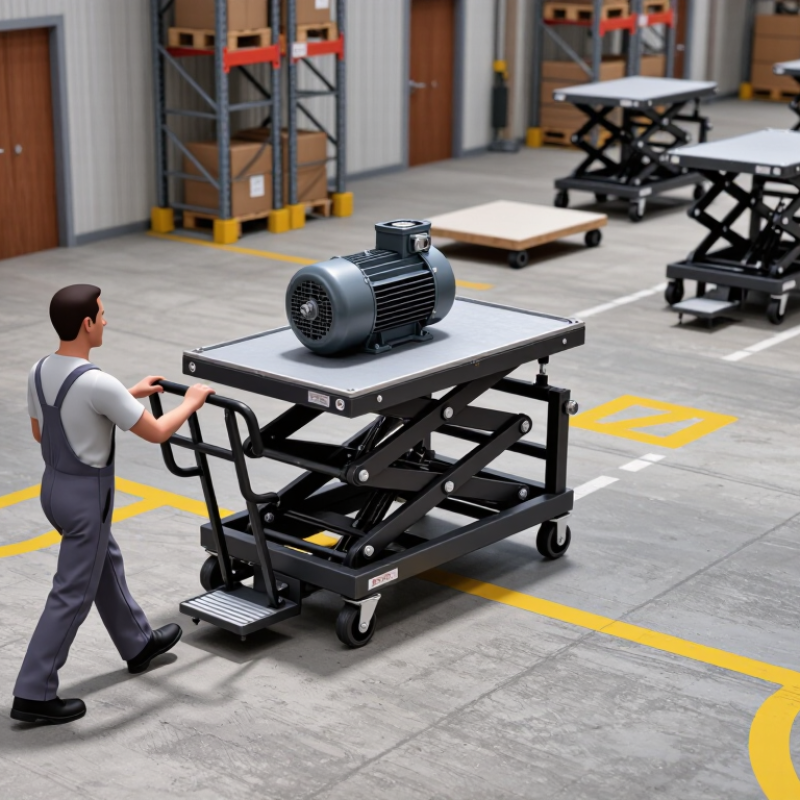
Start with the load, not the cart’s appearance. Record the maximum weight, load dimensions, and center of gravity. Include pallets, containers, tools, and temporary attachments. A 500-kilogram load may exceed the rated capacity when positioned near an edge. Measure the lowest and highest working levels. Then check whether the platform reaches both points without awkward bending or overreaching. These details shape the required lifting range, platform size, and stability.
Study the route as carefully as the task. Note door widths, floor joints, ramps, turning areas, and storage aisles. Small wheels can struggle across uneven concrete. Larger wheels usually roll more smoothly, but they may increase the cart’s overall height. Select brakes that hold securely on the actual floor surface. Test the handle position with gloved hands. Operators should not twist their backs while steering or lifting.
Power and work frequency also matter. Occasional maintenance work may suit a manual lifting system. Repeated movements usually demand powered lifting and easier controls. Estimate lifting cycles per hour, shift length, and charging access. Keep controls visible and protected from accidental activation. Guard pinch points and keep feet away from the platform during movement. My early equipment choices focused too heavily on capacity. I later found that poor maneuverability caused more delays than lifting limits. Leave room for real working conditions, because clean specifications rarely match a crowded workshop.
Choosing a lift table cart starts with three measurable questions: How much must it carry? How large must the platform be? How high must it travel? Select capacity above the heaviest real load, not the average load. A 500-kilogram cart carrying a 480-kilogram machine leaves little safety margin. Uneven loading can also shift the center of gravity. OSHA guidance requires loads to remain within rated capacity and stay stable during movement. The U.S. Bureau of Labor Statistics reported more than 2.6 million nonfatal workplace injuries in 2023, reminding buyers that safe handling decisions are not minor details.
Platform size should fit the load without creating dangerous overhang. Measure pallets, bins, and access points, then allow room for hand placement. A platform that is too large may reduce maneuverability in narrow aisles. Lifting range matters just as much. Compare the lowest height with the operator’s working position, and check the highest height against shelving or machine beds.
The 2024 LogisticsIQ warehouse automation report highlights continued investment in ergonomic material handling, but automation does not fix poor equipment selection. I have seen specifications chosen from catalog pictures. That approach is tempting, yet incomplete.
Tips: Record the heaviest load, its dimensions, and its center of gravity. Test the cart on the actual floor surface. Review duty cycle, wheel clearance, and brake performance. Leave a practical capacity margin; the exact percentage depends on site risk and operating conditions. Recheck the choice after workflow changes.
Choosing the right power source starts with the workload, not the purchase price. Manual hydraulic carts suit occasional lifting and short travel distances. Battery-powered units fit repeated cycles, heavier loads, and facilities with limited operator effort. Pneumatic systems can work in washdown or hazardous environments, but air quality and compressor capacity require careful checking.
A 2023 Liberty Mutual Workplace Safety Index reported that overexertion injuries cost U.S. employers about $12.8 billion in direct expenses. That figure supports reducing repetitive pushing and pumping when the work cycle is demanding.
Control design matters just as much. A pendant control keeps the operator beside the platform, while a foot switch can improve hands-free positioning. Choose guarded buttons, emergency stopping, travel limits, and visible load indicators.
OSHA reports that powered industrial trucks cause about 85 workplace fatalities and 34,900 serious injuries annually; lift carts are not forklifts, but the warning about uncontrolled movement remains relevant.
Test the cart with the real load, aisle width, floor condition, and operator gloves. A clean factory trial can mislead. Wet floors, cold batteries, or a poorly placed control may change everything.
The best system feels predictable, even when the operator is tired.
Evaluate Mobility, Stability, and Workplace Safety Features
Mobility is more than rolling smoothly. On a busy warehouse floor, a lift table cart should track predictably around shelving and doorways. Choose casters suited to the floor surface, not simply the largest available. Swivel casters improve turning, while fixed casters help maintain direction. A reliable brake should lock the wheels and reduce platform movement during loading. Test the handle height with gloves on. Small discomfort becomes a repeated strain.
Stability deserves equal attention. Check the cart’s rated capacity, platform dimensions, and load center. A heavy box placed near one edge can shift the balance quickly. A wide base and low lifting mechanism usually provide better control. Raise the platform gradually and watch for rocking, uneven movement, or unusual noise. These signs should not be ignored. I have seen workers focus on lifting height while overlooking how the cart behaves when fully loaded.
Workplace safety features should support real working habits. Look for guards around pinch points, controlled lowering, and a clear emergency stop or release system where applicable. A foot pedal or hand control should respond without forcing the operator to reach across the load. Locking the platform during maintenance is essential, but procedures must match the equipment design. Inspect wheels, welds, hydraulic components, and handles before each shift. No inspection is perfect. Fatigue, clutter, and rushed decisions still create risk, so training and sensible traffic routes matter as much as the cart itself.
A lift table cart should be judged by maintenance demands, not purchase price alone. The U.S. Department of Energy’s Operations & Maintenance Best Practices guide notes that operation and maintenance can represent 60–70% of lifecycle costs. That figure concerns facilities, but the warning applies here. Cheap wheels, exposed hydraulics, and difficult battery access can increase labor costs quickly. Check service intervals, replacement-part availability, lubrication points, and battery charging time. Ask for a written maintenance schedule.
Tips: Test the cart under its real load. Measure lifting cycles per shift. Inspect wheel bearings, platform edges, controls, and emergency stops. Keep inspection records with dates and defects. A simple log often reveals recurring failures before they become expensive downtime.
Certification paperwork deserves equal attention. Request the rated-load test, risk assessment, user manual, and conformity documents for the relevant machinery standard. ANSI MH29.1 provides safety requirements for industrial scissors lifts, while ISO 12100 supports machinery risk assessment and hazard reduction. Requirements vary by country and application, so local review matters. OSHA reports about 35,000 serious powered-industrial-truck injuries annually in the United States. A lift table cart is not automatically a powered truck, but the figure shows why movement, guarding, and operator training deserve scrutiny. I would not accept a certificate without checking its scope. That small detail is easy to miss. Include electricity, inspections, training, repairs, downtime, and disposal in the total operating cost. A spreadsheet may feel excessive, yet rough estimates can be misleading.
Record maximum load weight, dimensions, and center of gravity. Include pallets, tools, containers, and temporary attachments.
A 500-kilogram load may exceed safe capacity near an edge. Centered loads usually improve balance and control.
Measure the lowest and highest working levels. The platform should reach both without bending or overreaching.
Measure door widths, ramps, floor joints, turning spaces, and aisle clearance. A crowded workshop changes everything.
Match casters to the actual floor. Swivel casters improve turning, while fixed casters support straight travel. Test brakes on site.
Manual lifting may suit occasional maintenance. Repeated cycles usually justify powered lifting and easier controls.
Raise a loaded platform gradually. Watch for rocking, uneven movement, or unusual noise. Stop if anything feels wrong.
Look for pinch-point guards, controlled lowering, and an accessible emergency stop or release system. Keep feet away from the platform.
Check wheels, welds, hydraulic parts, handles, brakes, and controls. Inspections help, but fatigue and clutter still create risks.
Choosing the right Lift Table Cart begins with a clear understanding of your handling requirements. Consider the materials you need to move, their weight and dimensions, the lifting height, and how often the cart will be used. Compare load capacity, platform size, and lifting range to ensure the equipment can perform safely without being overloaded. The power source and control system should also match your workplace, whether you need manual operation, battery power, or another practical solution with precise and convenient controls.
Mobility and stability are equally important. Select suitable wheels, braking systems, and structural features for the floor conditions and working environment, while prioritizing safeguards that reduce the risk of tipping, unintended movement, or crushing. Before making a final decision, review maintenance requirements, available replacement parts, safety certifications, and the expected total operating cost. A well-chosen Lift Table Cart should provide reliable performance, support efficient material handling, and remain economical throughout its service life.