
Choosing a reliable Scissor Lift Trolley manufacturer in China requires more than comparing catalog prices. Buyers must examine lifting capacity, platform dimensions, working height, battery performance, and braking stability. A trolley may look compact in photographs, yet feel unstable when carrying a heavy mold across a busy workshop.
This guide introduces ten Chinese manufacturers connected with warehouse handling, factory logistics, maintenance, and material positioning equipment. Each company should be considered through practical evidence, including production experience, quality control procedures, engineering support, export history, and after-sales communication. Certifications can support credibility, but they should not replace careful product verification. Ask for test reports, load charts, warranty terms, spare-parts availability, and clear delivery conditions.
Details matter.
The ranking is not absolute. Market positions, product lines, and service quality can change over time. Some manufacturers may excel at standard hydraulic models, while others provide stronger customization for narrow aisles, stainless-steel applications, or frequent industrial use. A low quotation can hide limitations in battery life, weld quality, or maintenance access. That risk deserves attention. Buyers should also confirm whether the quoted lifting height refers to the platform or the fork surface. This guide aims to offer a balanced starting point, not a substitute for factory audits or sample testing. When possible, inspect welds, wheel materials, emergency controls, and lowering speed in real operating conditions. Reliable purchasing decisions come from comparing documented specifications with visible workmanship and responsive technical support.
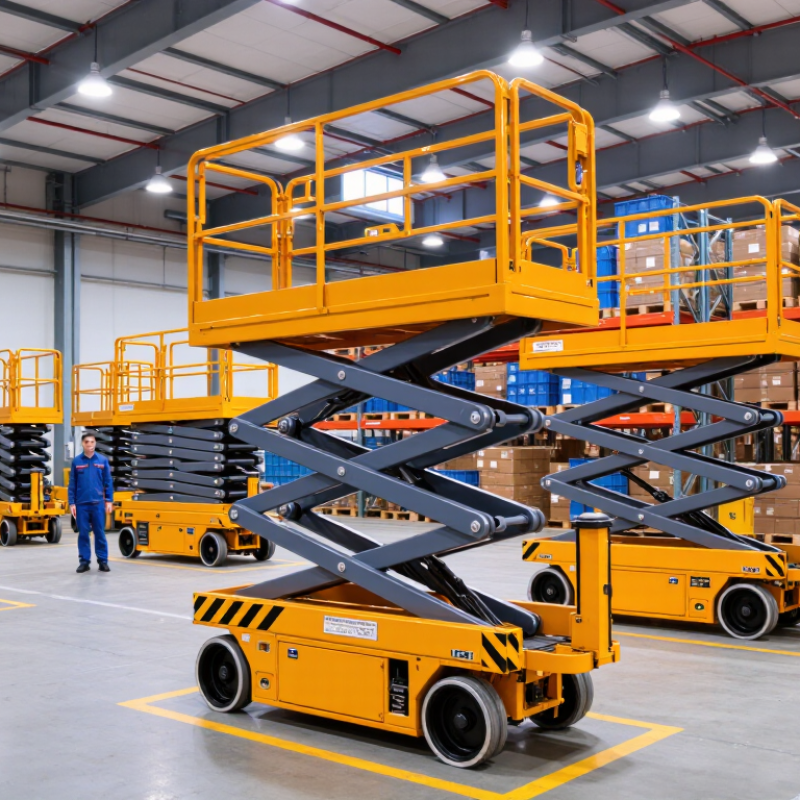
China Top 10 Scissor Lift Trolley Manufacturers?
Scissor lift trolleys support controlled lifting in warehouses, workshops, and assembly areas. Their typical capacity ranges from 150 to 500 kg. The lift range usually spans 0.9 to 1.5 meters. This difference affects both productivity and stability. A 150 kg model may suit cartons or small parts. A 500 kg unit handles tooling, pallets, or heavier fixtures.
Look closely at the working height. A 0.9-meter trolley can position loads near waist level. A 1.5-meter model can reach shelves or machine platforms. The load center matters. A heavy box placed too far forward can reduce balance, even below the rated capacity. Inspect the platform size, frame welds, wheel diameter, and brake performance. Four swivel casters may improve movement, but they can feel less stable on uneven floors. Small details matter.
Reliable manufacturers should provide load testing records, hydraulic specifications, and clear maintenance guidance. Ask about rated cycles, battery performance, emergency lowering, and spare-part availability. In practical use, operators often value smooth lifting more than maximum speed. That is easy to overlook. A catalog may show impressive numbers, yet real performance depends on floor quality and load distribution. I would also verify the stated capacity under the actual load center. This step is sometimes skipped, and that can create an uncomfortable surprise.cuntegn
China’s top 10 scissor lift trolley manufacturers should be compared through measurable working data, not attractive brochures. This ranking weighs rated load, maximum lift height, and available drive options. A trolley carrying 300 kilograms may suit warehouse cartons, while a 1,000-kilogram model needs stronger frames, brakes, and hydraulic protection. Some units reach 1.5 meters, while larger designs exceed 3 meters. Higher lifting often reduces maneuverability. That trade-off is easy to overlook.
Drive configuration also separates these manufacturers. Manual push models are simple and economical for short indoor routes. Electric travel systems reduce operator fatigue across long aisles. Self-propelled versions offer better control on busy floors, but they require battery checks and trained operation. During equipment evaluations, I would inspect wheel diameter, turning radius, platform stability, and emergency lowering. Published capacity can look impressive. Real performance depends on floor condition and load balance.
Tips: Match the lift height to your actual rack level, not a future target. Check whether the rated load applies at full extension. Ask for load-test records, component specifications, and service response times. Confirm battery charging requirements before purchase. A model may lift high but move slowly. Another may carry more but feel awkward in narrow aisles. These details deserve practical testing. Specifications are useful, but they are not the whole answer.
China Top 10 Scissor Lift Trolley Manufacturers?
When comparing China’s leading scissor lift trolley manufacturers, voltage matters more than many buyers expect. A 12 V system suits light warehouse movement, short lifting cycles, and compact equipment. A 24 V system usually delivers stronger starting power and better endurance under heavier loads. It also tends to reduce current demand, which can improve cable efficiency and reduce heat during repeated operation.
Hydraulic models provide steady lifting force, especially with uneven loads. They are practical for workshops, warehouses, and maintenance areas. However, operators should inspect oil lines, seals, and lowering speed regularly. Electric scissor lift trolleys offer cleaner operation and easier control. Their efficiency depends on motor quality, battery capacity, charger performance, and floor conditions. Manual models remain useful for short-distance handling. No charging station is needed. They are slower, though.
A reliable supplier should provide load-test records, battery-cycle data, emergency lowering details, and clear maintenance instructions. Check weld quality around the platform and examine wheel alignment. Small defects become obvious under daily use. In a practical comparison, measure lifting time, noise, battery consumption, and performance at full rated load. Do not trust efficiency figures without test conditions. A polished specification sheet can still hide weak endurance. I would also request a sample unit before placing a large order, because real warehouse floors rarely match showroom conditions.
Representative non-branded configurations comparing rated load capacity and typical lifting speed across manual, 12 V and 24 V systems. Higher voltage can support larger electric drive systems, but overall efficiency also depends on motor type, hydraulic losses, battery capacity and load distribution.
Manual hydraulic trolleys generally provide lower lifting speed but require no traction battery. Electric models typically offer faster and more repeatable lifting, while 24 V systems are commonly selected for higher loads, longer duty cycles and heavier industrial applications.
For buyers comparing China’s top 10 scissor lift trolley manufacturers, safety evidence should come before price or lifting capacity. EN 1570-1 requires controls for foreseeable hazards, stable platforms, controlled movement, and protection against crushing points. A compliant design should also show clear rated-load information and documented testing.
Small details matter. For example, a guardrail should resist accidental opening, while the emergency stop must remain reachable from the operating position. It should stop hazardous movement quickly, not merely cut power after a delay.
CE marking indicates conformity with applicable European requirements, but it is not a quality award. The technical file, risk assessment, declaration of conformity, and test records deserve careful review.
The European Commission’s Safety Gate report recorded more than 3,400 dangerous-product alerts in 2023, showing why paperwork alone cannot replace practical inspection. The UK HSE’s Fatal injuries in Great Britain 2023/24 report recorded 50 worker deaths from falls from height. That figure is sobering, although a trolley lift is not automatically a work-at-height platform.
Ask manufacturers to demonstrate overload protection, anti-tilt stability, guardrail strength, wheel locking, and emergency lowering. Request videos from factory testing, not only polished catalog images.
Check welds, hydraulic hoses, limit switches, and battery isolation in person when possible. Imperfect documentation should trigger questions. It may reflect weak control—or simply poor translation—but neither should be ignored.
A competent supplier welcomes independent inspection and provides traceable serial-number records.
A reliable shortlist needs more than factory photographs. Fortune Business Insights estimates the global aerial work platform market at about USD 9.96 billion in 2023, with continued growth through 2032. This demand makes supplier claims attractive, but not every “top 10” list uses audited evidence. Check factory registration, ISO 9001 records, load-testing procedures, and recent export documents. A practical warranty should state coverage length, battery exclusions, response time, and spare-parts availability. Two years sounds strong until batteries are excluded.
Production capacity also needs verification. Ask for monthly output, assembly-line photographs, inspection records, and delivery evidence for similar orders. A workshop may claim 500 units monthly, yet only complete small batches. Export performance is more useful when measured through repeat shipments, destination markets, customs records, and installation support. Request references from distributors, not only selected end users. This step often reveals slow communication or incomplete manuals. My own caution: capacity figures can be technically true but commercially misleading.
Tips: Compare three written quotations using the same lifting height, platform size, battery type, and safety configuration. For customization, confirm drawings, prototype charges, tooling ownership, and change-control rules before paying a deposit. EN 280 and relevant electrical safety testing can improve confidence, but certificates should match the exact model. Warranty quality is also operational: a replacement controller arriving in ten days may matter more than a longer promise. Keep a scoring sheet, and record every unanswered question. That uncomfortable detail deserves weight.
Compare rated load, maximum lift height, and drive type. A 300-kilogram model may suit cartons and short warehouse routes. A 1,000-kilogram model needs stronger frames, brakes, and hydraulic protection. Brochures are not enough.
A 12 V system suits light loads and short lifting cycles. A 24 V system usually provides stronger starting power and longer endurance. It may also reduce cable heat during repeated operation. Real results depend on the battery and floor.
Manual models work well for short indoor distances. They need no charging station or battery inspection. They are slower and require more physical effort. That trade-off is easy to miss.
Electric travel reduces operator fatigue across long aisles. It is useful when loads move repeatedly over smooth floors. Check battery capacity, charger performance, and emergency controls. Test it loaded.
Hydraulic systems provide steady lifting force during uneven loading. Inspect oil lines, seals, and lowering speed regularly. A stable lift does not guarantee easy movement. The floor still matters.
Ask whether the rated load applies at full extension. Request load-test records and component specifications. Measure lifting performance with a balanced, full-rated load. Published numbers can mislead.
Check wheel diameter, turning radius, platform stability, and overall trolley width. Higher lifting capacity may reduce control in narrow aisles. A tall model can feel awkward beside storage racks. Not always obvious.
Request battery-cycle data, charging requirements, and emergency-lowering instructions. Ask about service response times and routine inspection intervals. Examine welds around the platform and check wheel alignment. Small defects grow quickly.
Showroom floors rarely match working warehouses. Test noise, lifting time, battery use, braking, and movement at full load. The trolley may lift well but move slowly. I would test twice.
This guide explores the fundamentals of the Scissor Lift Trolley, focusing on common load capacities from 150 to 500 kg and lifting heights between 0.9 and 1.5 meters. It presents a practical comparison of China’s leading manufacturers based on load performance, lift range, mobility, and drive options. Readers will also learn how hydraulic, electric, and manual models differ, including the efficiency and application suitability of 12 V and 24 V systems.
Safety and purchasing considerations are central to the guide. It explains the importance of EN 1570-1 compliance, CE marking, emergency-stop functions, guardrails, and stable operation. The buyer’s guide further highlights warranty terms, production capacity, customization services, spare-parts support, and export experience. Together, these factors help buyers select a reliable Scissor Lift Trolley for warehouses, workshops, production areas, and material-handling applications.
