
Choosing among China’s top hydraulic table manufacturers requires more than comparing prices or glossy catalogs. Global buyers need dependable equipment, clear documentation, and suppliers that understand demanding industrial environments. This guide introduces manufacturers with relevant production experience, engineering capability, and export support.
A Hydraulic Table may serve a warehouse, assembly line, loading area, or clean production room. Its performance depends on more than lifting height. Buyers should examine rated load, platform size, stroke length, cycle time, hydraulic components, guarding, and control options. Factory quality systems also matter. Look for traceable testing, welding inspection, overload protection, and practical maintenance guidance.
Details matter. Claims need proof.
Experienced sourcing teams often request videos of load tests, sample inspection records, and references from comparable projects. They also check whether the supplier can adapt voltage, safety features, documentation, and packaging for different markets. A strong manufacturer should explain limitations clearly, not only promote maximum capacity. That honesty builds confidence.
This overview will compare production strengths, product ranges, customization ability, certifications, lead times, and after-sales communication. It will also consider how manufacturers respond when specifications change or a technical issue appears after delivery. No ranking is perfect. Factory capability can vary by model, project size, and production period. Some comparisons remain difficult without an independent audit or sample order. That gap matters. The goal is not to name a supplier blindly, but to help buyers ask sharper questions and make a more reliable purchasing decision.
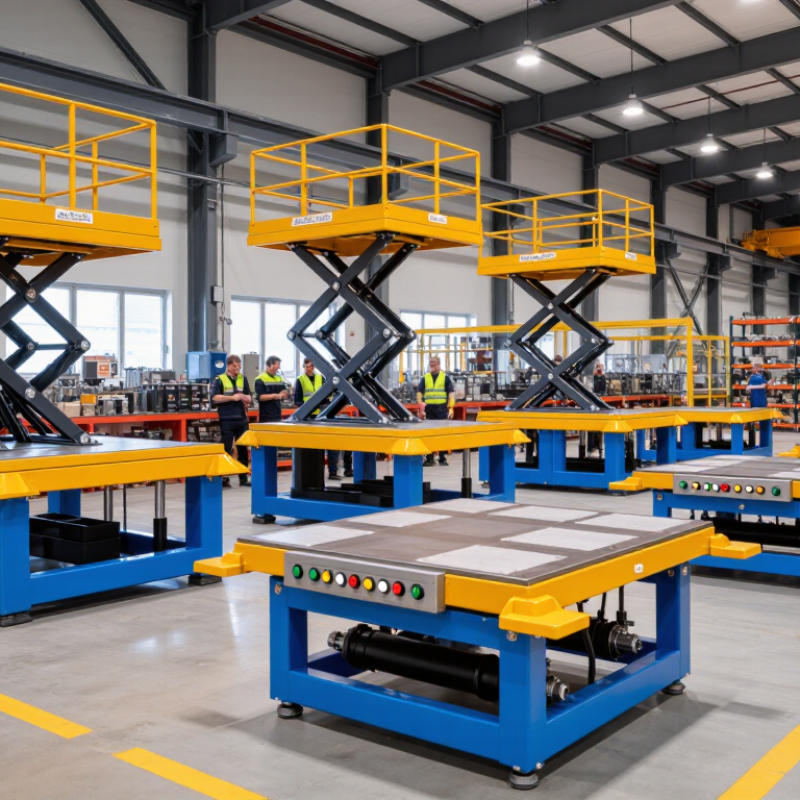
China Top Hydraulic Table Manufacturers for Global Buyers
Hydraulic lift tables are commonly grouped from 300 kg to 10,000 kg. Capacity is not everything. A 300 kg table suits small cartons, bins, and light assembly work. Models between 500 and 2,000 kg often handle pallets, machinery parts, and workshop fixtures. Heavier units support engine components, steel frames, and industrial loading tasks.
Measure the load. Include the pallet, tools, and uneven weight distribution. A table rated for 1,000 kg may perform poorly when the load sits near one edge. Platform size, lift height, cycle frequency, and floor conditions also affect selection. In practical inspections, operators often overlook the center of gravity. That detail matters. Hydraulic pressure, cylinder design, and frame thickness should match the working class, not only the advertised maximum.
The 3,000 to 5,000 kg range fits demanding production areas, while 10,000 kg tables require stronger floors and carefully planned access. A larger capacity can increase cost, maintenance needs, and installation difficulty. I would not specify the highest class automatically. Test the intended load under real conditions. Check lowering speed, emergency stopping, guard clearance, and visible hydraulic leakage. Ratings may vary between static and moving loads, so technical documents deserve close review. A small safety margin helps, but excessive capacity is not always efficient. Regular inspection remains necessary, especially where dust, moisture, or repeated impacts are present.
Typical hydraulic lift table reference data by rated load class. Dimensions and performance ranges vary by platform size, lifting height, duty cycle, and safety configuration.
| Load Class | Rated Capacity | Typical Platform Size (L × W) |
Typical Lift Range | Typical Lowered Height | Typical Power Unit | Common Applications | Typical Duty Level |
|---|---|---|---|---|---|---|---|
| Class 1 | 300 kg | 900 × 600 mm to 1,200 × 800 mm |
600–900 mm | 150–250 mm | 0.75–1.5 kW electric-hydraulic unit | Light assembly, packing, laboratory and retail handling | Light to medium |
| Class 2 | 500 kg | 1,000 × 700 mm to 1,300 × 900 mm |
700–1,000 mm | 180–280 mm | 1.1–1.5 kW electric-hydraulic unit | Work-position adjustment, warehouse picking and material transfer | Medium |
| Class 3 | 1,000 kg | 1,200 × 800 mm to 1,600 × 1,000 mm |
800–1,300 mm | 220–350 mm | 1.5–2.2 kW electric-hydraulic unit | Pallet handling, production lines and loading-area transfer | Medium to heavy |
| Class 4 | 1,500 kg | 1,300 × 900 mm to 1,800 × 1,100 mm |
900–1,400 mm | 250–400 mm | 2.2–3.0 kW electric-hydraulic unit | Industrial assembly, pallet positioning and machine loading | Heavy |
| Class 5 | 2,000 kg | 1,500 × 1,000 mm to 2,000 × 1,200 mm |
1,000–1,500 mm | 280–450 mm | 2.2–4.0 kW electric-hydraulic unit | Heavy pallet transfer, fabrication and logistics operations | Heavy duty |
| Class 6 | 3,000 kg | 1,600 × 1,000 mm to 2,200 × 1,400 mm |
1,000–1,600 mm | 320–500 mm | 4.0–5.5 kW electric-hydraulic unit | Automotive components, steelwork and industrial production cells | Heavy duty |
| Class 7 | 4,000 kg | 1,800 × 1,200 mm to 2,500 × 1,500 mm |
1,100–1,800 mm | 350–550 mm | 4.0–7.5 kW electric-hydraulic unit | Industrial tooling, foundry handling and large-load positioning | Very heavy duty |
| Class 8 | 5,000 kg | 2,000 × 1,300 mm to 2,800 × 1,600 mm |
1,200–2,000 mm | 400–600 mm | 5.5–7.5 kW electric-hydraulic unit | Heavy machinery, vehicle components and factory logistics | Very heavy duty |
| Class 9 | 7,500 kg | 2,200 × 1,400 mm to 3,000 × 1,800 mm |
1,200–2,000 mm | 450–700 mm | 7.5–11 kW electric-hydraulic unit | Steel processing, heavy engineering and large pallet systems | Extra heavy duty |
| Class 10 | 10,000 kg | 2,500 × 1,500 mm to 3,500 × 2,000 mm |
1,200–2,000 mm | 500–800 mm | 11–15 kW electric-hydraulic unit | Heavy machinery transfer, shipyard work and industrial assembly | Extra heavy duty |
| Technical note: Rated capacity refers to the maximum evenly distributed load under the specified operating conditions. Off-center loads, impact loads, platform extensions, travel frequency, ambient temperature, and required safety factors can reduce usable capacity. Final selection should be confirmed through the manufacturer’s load chart, structural calculations, hydraulic pressure limits, and applicable local safety requirements. | |||||||
Request quality certificates, risk assessments, test records, inspection documents, and shipment traceability. Catalogue photos prove very little.
No. It confirms a controlled quality system, not automatic approval for every model. Check scope, validity, audit body, and factory address.
It addresses lifting-table safety, including stability, guarding, emergency controls, and controlled lowering. Confirm the correct edition and application.
Ask for rated-load tests, leakage checks, platform deflection, lowering speed, noise readings, and repeated-cycle results.
Serial numbers should connect reports to a real unit. Visible gauges help, but photographs alone remain weak evidence.
Share rated load, lifts per hour, daily operating hours, platform travel, and load distribution. A five-minute lifting cycle changes requirements.
Check overload protection, hose-rupture valves, emergency stops, limit switches, anti-crush clearances, guardrails, and toe protection.
Request the Declaration of Conformity, risk assessment, technical-file information, wiring diagrams, and safety instructions for the exact configuration.
Review motor temperature, pump noise, descent speed, oil leakage, load position, temperature, cycle count, and calibration dates.
Compare test methods carefully. Some reports omit conditions, and translations may lose details. Honest explanations of failures can be reassuring. No checklist is perfect.
This guide explains how global buyers can evaluate a Hydraulic Table across load classes ranging from 300 kg to 10,000 kg. It compares Chinese manufacturers through practical indicators such as ISO 9001 systems, EN 1570-1 alignment, documented load testing, platform dimensions, lift configurations, and hydraulic systems operating between 70 and 210 bar. Readers will also learn how to match table design with lifting height, working environment, duty cycle, and handling requirements.
The sourcing checklist focuses on factory audits, safety features, emergency stop functions, overload protection, guarding, and CE documentation where applicable. It also outlines key purchasing metrics, including export paperwork, production lead times, inspection procedures, warranty terms, spare-part support, and total pricing. By reviewing these factors together, buyers can shortlist dependable suppliers, reduce project risks, and select lifting equipment that meets operational, safety, and international procurement expectations.
