
10 Best Motorcycle Lift Tables for Global Buyers

Time:2026-09-17 Author:Amelia
0%

Choosing the right Motorcycle Lift Table is not simply a matter of finding the highest lifting capacity. A reliable table must support the motorcycle steadily, protect the technician, and fit the workshop’s daily rhythm. As Max McAllister, founder of Traxxion Dynamics, has said, “A lift should make the motorcycle easier to control, not merely raise it.” That principle matters for global buyers comparing equipment across different motorcycle sizes, workshop layouts, and operating conditions.

This guide examines ten Motorcycle Lift Table options for professional garages, mobile technicians, dealerships, and serious home workshops. Each model deserves attention for practical details, including platform length, minimum height, maximum capacity, wheel-chock design, safety locks, hydraulic performance, and ease of movement. A 1,500-pound rating may sound impressive, yet it does not guarantee stable support for every touring motorcycle. Small details matter. Platform flex matters. Lock access matters.

Global purchasing also creates less visible concerns. Voltage compatibility, replacement parts, shipping damage, warranty coverage, and local technical support can change the real value of a lift. Some tables look excellent in photographs but feel inconvenient during repeated service work. Others appear basic, then prove dependable for years. No option is perfect. My own preference may lean toward stability over portability, although a mobile mechanic could reasonably disagree. Readers should verify current specifications with manufacturers before ordering, especially when importing heavy workshop equipment. The final choice should match the motorcycle, the workspace, and the person using it. Safety must remain the deciding factor.
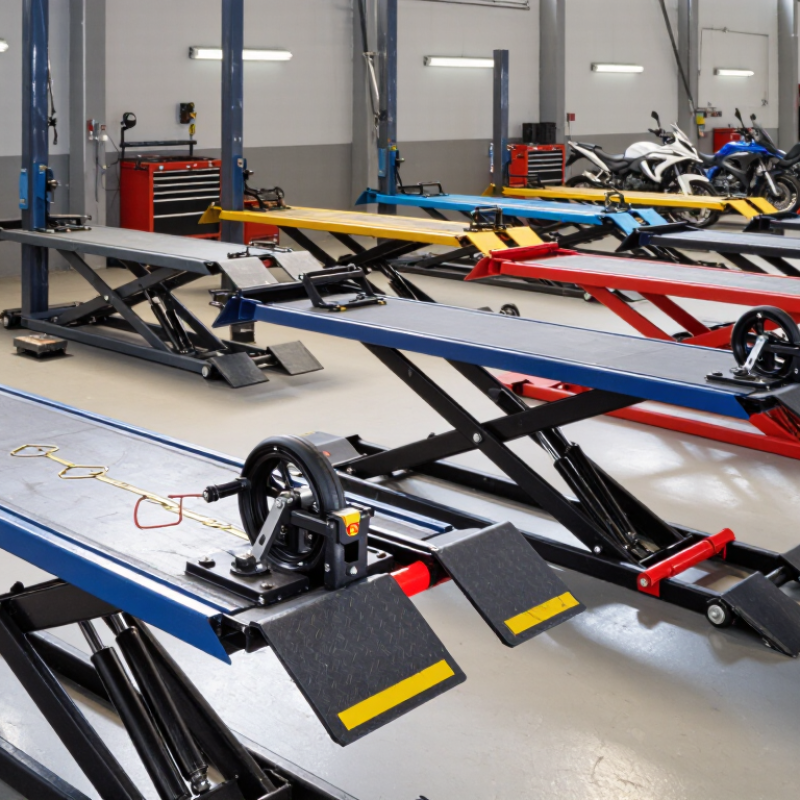
10 Best Motorcycle Lift Tables for Global Buyers

Motorcycle Lift Table Types and Their Core Functions

Motorcycle Lift Table Types and Their Core Functions

Motorcycle lift tables differ by structure, lifting method, and working height. Scissor-style tables rise through a compact central mechanism. They suit small workshops because they save floor space. Parallel-lift tables provide a broader, steadier platform for heavier motorcycles. Hydraulic models offer smooth elevation and precise positioning. Pneumatic tables can work efficiently where compressed air is already available. However, they depend on a clean, stable air supply.

A low-profile table helps technicians roll motorcycles onto the platform without steep ramps. A built-in wheel chock holds the front wheel during inspection. Side extensions create more room for wider bikes and removable components. Mobile tables include casters, but mobility should never replace firm locking systems. In practical workshop use, check the rated capacity against the motorcycle’s real weight, including luggage and accessories. A small calculation error can become a serious stability problem. I have found that platform length is often overlooked, especially with touring motorcycles. That mistake is easy to make.

Tips: Measure your available floor space before choosing a table. Check lifting range, platform width, lock positions, and hydraulic hose protection. Select a model with mechanical safety locks, not hydraulic pressure alone. Confirm the power or air requirements for your facility. Review local equipment standards before purchase, because requirements vary between countries. A bright work light also helps reveal leaks, loose fasteners, and damaged tie-down points. Be realistic about maintenance time. A neglected lift is not a dependable lift.

Key Specifications for Comparing Lift Tables Worldwide

Comparing motorcycle lift tables worldwide requires more than checking maximum capacity. A 2024 market report by Grand View Research identifies repair and maintenance demand as a major growth driver for lifting equipment. That demand favors compact, serviceable designs. Check rated load first, then reserve at least 20% for tools, fuel, and uneven loading. A 450-kilogram rating may be unsuitable for a 360-kilogram motorcycle with heavy accessories.

Platform length, width, and minimum height affect real workshop use. Look for a deck long enough to support both wheels, with a textured surface and adjustable wheel chocks. A working height near 750–1,000 millimeters reduces bending during brake or suspension work.

EN 1493 vehicle-lift guidance emphasizes mechanical locking and stability, while regional electrical standards may affect motor voltage, plugs, and emergency controls. Hydraulic systems should include hose-burst protection and clearly marked service points.

Do not compare lifting height alone. Ask for the measured height under full rated load. Some catalog figures seem optimistic. Noise, cycle time, corrosion protection, and replacement seals matter for coastal workshops and frequent commercial use. A 2023 report from MarketsandMarkets describes increasing demand for safer, more efficient automotive workshop equipment, but efficiency is not only motor speed. Verify test certificates, load-test records, warranty coverage, and local parts support before ordering. The cheapest table can become expensive after one unavailable valve.

Safety Features and Proper Motorcycle Loading Procedures

Choosing among the 10 best motorcycle lift tables for global buyers requires more than comparing lifting height. Safety features should guide the decision. Look for a stable steel platform, mechanical locking positions, an emergency stop, and a clearly rated load capacity. Anti-slip surface matters when tires are wet or dusty. Check the welds, hinge points, and wheel chocks before every use. A hydraulic system can lose pressure. Never trust pressure alone.

Loading must be slow and controlled. Place the lift on a flat, solid floor. Lock its casters, lower the platform fully, and align the motorcycle with the centerline. Keep the engine off while pushing. Use a ramp with side edges, then secure the front wheel immediately. Add rated tie-down straps at strong frame points. Compress the suspension slightly, but do not crush cables or brake lines. Raise the table only a few centimeters first. Stop and check balance. I sometimes see operators hurry here, and that small mistake can become expensive.

Tips: Keep hands away from pinch points. Use two people for heavy motorcycles. Confirm the table’s capacity includes tools and accessories. Inspect straps for cuts before each lift. Test the locking mechanism at working height. If the motorcycle shifts, lower it carefully and correct the position. A written loading checklist feels excessive, but it prevents forgotten steps. Also, read the supplied manual and verify local workplace requirements, because table designs and safety expectations differ between countries.

Top Motorcycle Lift Tables for Different Buyer Needs

The best motorcycle lift table depends on the buyer’s workspace, budget, and service routine. A home mechanic may prefer a compact hydraulic model with a foot pedal and a locking bar. It should fit through the garage door and support the motorcycle’s real working weight, not just its advertised maximum. Measure twice.

Professional workshops need wider decks, stronger frames, and faster lifting cycles. A removable front wheel clamp can improve stability during tire work, while adjustable tie-down points help secure different motorcycle shapes. Look for mechanical safety locks, non-slip surfaces, and clear load ratings. A stable table protects both the machine and the person working beside it.

Mobile technicians may value a lighter table with casters and a manual pump. Electric models can save effort, but global buyers should check voltage, plug type, spare parts, and local service support. Manual systems avoid some electrical compatibility problems, though they demand more physical work. I once favored maximum lifting height, but daily access and storage space mattered more. That choice was not perfect. Buyers should also inspect weld quality, hydraulic seals, wheel clearance, and the manufacturer’s maintenance guidance. A reasonable warranty helps, but practical repair access matters more.

10 Best Motorcycle Lift Tables for Global Buyers - Top Motorcycle Lift Tables for Different Buyer Needs

Rank Best For Lift Table Type Typical Rated Capacity Typical Lift Range Typical Platform Size Power Source Key Advantage Important Buying Consideration
1 Overall workshop use Hydraulic scissor lift table 1,000–1,500 lb
(454–680 kg)
7–33 in
(18–84 cm)
24–30 × 84–96 in
(61–76 × 213–244 cm)
Foot-pumped hydraulic Balanced capacity, height, and serviceability for most motorcycles. Confirm the minimum height, locking positions, and wheel-chock compatibility.
2 Heavy touring motorcycles Heavy-duty hydraulic lift 1,500–2,000 lb
(680–907 kg)
7–30 in
(18–76 cm)
24–30 × 84–96 in
(61–76 × 213–244 cm)
Hydraulic foot pump Provides a higher safety margin for large touring and cruiser motorcycles. Check the actual load rating, frame rigidity, and ramp capacity rather than deck rating alone.
3 Low-clearance motorcycles Low-profile scissor lift 1,000–1,500 lb
(454–680 kg)
4–28 in
(10–71 cm)
22–28 × 80–90 in
(56–71 × 203–229 cm)
Hydraulic or pneumatic Easier loading for low-slung cruisers, sport bikes, and motorcycles with limited ground clearance. Measure the motorcycle's lowest point and compare it with the fully lowered table height.
4 Professional repair shops Air-over-hydraulic lift table 1,000–1,500 lb
(454–680 kg)
7–33 in
(18–84 cm)
24–30 × 84–96 in
(61–76 × 213–244 cm)
Compressed air Fast, repeatable lifting for frequent servicing and commercial workshop environments. Requires a suitable air compressor, air line, filter, and regulator.
5 Home garages Compact hydraulic motorcycle lift 1,000–1,200 lb
(454–544 kg)
5–29 in
(13–74 cm)
21–24 × 78–84 in
(53–61 × 198–213 cm)
Manual hydraulic Uses less floor space while handling most standard motorcycles. Review folded dimensions, caster quality, storage position, and available working clearance.
6 Motocross and dirt bikes Portable dirt-bike lift table 300–1,000 lb
(136–454 kg)
9–32 in
(23–81 cm)
14–20 × 25–35 in
(36–51 × 64–89 cm)
Foot-pumped hydraulic Small footprint and easy movement for lightweight off-road motorcycles. The narrower deck may not support wide touring or adventure motorcycles safely.
7 Adventure and dual-sport bikes Wide-deck hydraulic lift 1,000–1,500 lb
(454–680 kg)
7–30 in
(18–76 cm)
28–34 × 84–96 in
(71–86 × 213–244 cm)
Hydraulic foot pump Offers extra lateral stability for tall, wide, and heavily equipped motorcycles. Verify deck width, tie-down locations, and the center-of-gravity position during loading.
8 Mobile service operations Rolling portable lift table 800–1,200 lb
(363–544 kg)
6–28 in
(15–71 cm)
22–28 × 78–90 in
(56–71 × 198–229 cm)
Manual hydraulic Integrated casters allow repositioning inside workshops and service bays. Locking casters are essential; never move the table with an unsecured motorcycle on it.
9 Limited electrical infrastructure Manual pedal-operated lift 800–1,200 lb
(363–544 kg)
6–29 in
(15–74 cm)
22–28 × 78–90 in
(56–71 × 198–229 cm)
Manual hydraulic Works without mains electricity, making it practical for remote garages and export markets. Manual pumping requires more operator effort and may be slower during repeated use.
10 Frequent production or dealership use Powered hydraulic lift table 1,000–1,500 lb
(454–680 kg)
7–33 in
(18–84 cm)
24–30 × 84–96 in
(61–76 × 213–244 cm)
Electric-hydraulic Reduces operator fatigue and supports fast, repeated lifting cycles. Check local voltage, plug configuration, emergency-stop functions, and electrical safety certification.
Specification note: Capacity, lift height, and platform dimensions are typical ranges for commercially available motorcycle lift tables. Actual specifications vary by configuration, safety accessories, and regional standards. Always compare the manufacturer's rated working load, locking system, and operating instructions before purchase.

Global Purchasing, Shipping, and Maintenance Considerations

Choosing among the 10 Best Motorcycle Lift Tables for Global Buyers requires more than comparing lifting capacity. Maritime shipping carries over 80% of global merchandise trade, according to UNCTAD’s Review of Maritime Transport 2024. Therefore, crate dimensions, gross weight, and port handling requirements matter greatly. A compact table may reduce freight costs, but weaker packaging can invite damage during transshipment.

The World Bank’s Logistics Performance Index 2023 shows major differences in customs, infrastructure, and shipment reliability. Buyers should request commercial invoices, packing lists, technical manuals, and accurate product classifications before ordering. Confirm voltage, hydraulic-fluid compatibility, spare-part availability, and local service support. A table designed for one workshop may perform poorly in a humid coastal warehouse. That risk is easy to underestimate.

Tips: Ask for a seaworthy crate, corrosion protection, and shock indicators. Measure doors, ramps, and storage space before purchase. Keep photos of the package before opening. During maintenance, inspect welds, hoses, locking devices, and oil leaks at scheduled intervals. Follow the manufacturer’s load limits, not optimistic workshop habits. I would not choose the cheapest option automatically; long-distance freight, missing seals, and delayed parts can erase the saving. Still, premium pricing does not guarantee perfect support. Get everything in writing.

FAQS

What type of motorcycle lift table suits a small workshop?

A scissor-style table saves floor space. It offers practical lifting for compact workshops. Space still matters.

When is a parallel-lift table a better choice?

It provides a wider, steadier platform for heavier motorcycles. Check the full motorcycle weight, including luggage and accessories.

What safety features should a lift table include?

Look for mechanical safety locks, an emergency stop, a stable steel platform, and a rated load capacity. Never trust hydraulic pressure alone.

How should a motorcycle be loaded safely?

Place the table on a flat floor. Lock the casters, lower the platform, and align the motorcycle centrally. Push slowly with the engine off.

How can the motorcycle remain stable during lifting?

Secure the front wheel immediately. Use rated tie-down straps on strong frame points. Raise the table a few centimeters first, then check balance.

What should buyers measure before purchasing?

Measure floor space, doors, ramps, and storage areas. Check platform length, width, lifting range, and lock positions. Touring motorcycles need extra length.

What matters when shipping a lift table internationally?

Confirm crate dimensions, gross weight, packaging strength, and port handling needs. Request corrosion protection and shock indicators. Freight damage is possible.

How can buyers prepare for maintenance?

Inspect welds, hoses, hinges, wheel chocks, locks, and oil leaks regularly. Keep a bright work light nearby. A neglected lift becomes unreliable.

Should the cheapest lift table be selected?

Not automatically. Missing seals, delayed parts, and weak packaging can erase the saving. Still, higher pricing does not guarantee better support.

What documents and technical details should buyers confirm?

Request invoices, packing lists, manuals, accurate classifications, voltage details, and spare-part information. Verify local workplace requirements, because rules differ between countries.

Conclusion

Choosing the right Motorcycle Lift Table begins with understanding the main types, including hydraulic, pneumatic, electric, and manually operated models. Each type offers different lifting capacities, platform sizes, height ranges, and portability levels. Buyers should compare these specifications according to motorcycle weight, workshop space, power availability, and intended frequency of use. Features such as wheel chocks, tie-down points, safety locks, anti-slip surfaces, and overload protection are essential for stable and secure operation.

Proper loading procedures include positioning the motorcycle centrally, engaging the wheel restraint, securing the frame with suitable straps, and checking that the lift is locked before maintenance begins. This guide also compares lift tables for home garages, professional workshops, mobile service teams, and budget-conscious buyers. For international purchasing, readers should consider packaging quality, shipping dimensions, import requirements, replacement parts, warranty support, and local maintenance capabilities. With careful selection and routine inspection, a suitable Motorcycle Lift Table can improve efficiency, safety, and long-term workshop value.

Amelia

Amelia

Amelia is a seasoned marketing professional with a wealth of expertise in our company’s core offerings. With an unwavering passion for driving growth and innovation, she plays a pivotal role in shaping our marketing strategies and enhancing brand visibility. A key aspect of her responsibilities......