
What Is the Best Hydraulic Lift Cart in 2026?

Time:2026-09-28 Author:Mason
0%

Choosing the best Hydraulic Lift Cart in 2026 is less about finding the biggest capacity number and more about matching the cart to the work. A cart that lifts 1,000 pounds may still be the wrong choice if its platform is too small, its lowered height cannot clear a pallet, or its wheels struggle over a rough workshop floor. Small details matter.

For this comparison, equipment specialist Jordan Lee offers this original editorial principle: “A lift cart earns its place when it moves the load safely, steadily, and without adding strain to the task.” Treat that as a practical test, not a substitute for checking a model’s published specifications. Consider rated capacity, lift range, platform dimensions, pump design, wheel brakes, and handle comfort. Then picture the actual job: a crate rising beside a workbench, a drum moving across concrete, or a component held steady at assembly height.

Real use can be less tidy than a product page suggests. A cart may feel smooth unloaded but behave differently near its rated limit. That deserves a second look. This guide compares leading options by intended use, build, usability, and value, while separating verifiable specifications from features that depend on the operator or workspace. There is no universal winner. The best choice is the one that fits the load, route, and lifting height you use every day.
What Is the Best Hydraulic Lift Cart in 2026?

Define Hydraulic Lift Carts and Their Scissor-Lift Mechanism

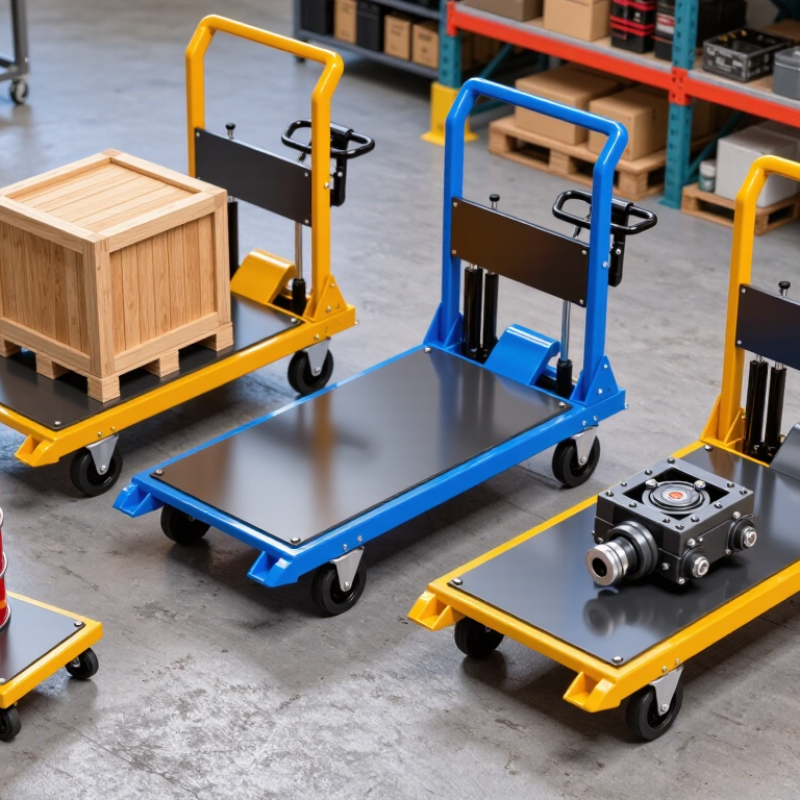
A hydraulic lift cart is a wheeled platform that raises or lowers a load using hydraulic pressure. On a manual model, an operator pumps a foot pedal, sending fluid into a cylinder. The cylinder extends and pushes the crossed scissor arms apart, lifting the platform. Opening the release valve lets fluid return, lowering the load. Slowly. The mechanism gives workers adjustable access to bins, fixtures, and work surfaces without repeatedly lifting items from floor level. It does not remove every handling risk; pushing, turning, and reaching still matter.

Capacity depends on more than the number printed on a label. Load position, platform height, uneven flooring, and wheel condition can affect stability. Keep the load centered, move slowly, and lower the platform before traveling when practical. The U.S. Bureau of Labor Statistics reported a 2.4 injury-and-illness case rate per 100 full-time equivalent workers in private industry for 2023. That broad figure is not specific to lift carts, but it reinforces why safer material handling deserves attention. A cart is a tool, not a guarantee. For selection, compare rated capacity, platform dimensions, lift range, and brake design with the actual task; a cart that fits the load poorly can make routine work awkward.

Compare Common 150–1,000 kg Capacity Ratings and Lift Heights

Hydraulic lift carts commonly span rated capacities from about 150 to 1,000 kg, but a larger number does not automatically mean a better fit. A 150–300 kg cart may suit boxes, tools, or small assemblies moving between nearby workstations. Models rated around 500 kg offer more reserve for heavier components, while 1,000 kg units are intended for substantial loads and need a stable floor. Check the rating plate and manual; the stated capacity applies under specified conditions, not every load shape.

Lift height deserves equal attention. Some carts raise a platform only enough to ease transfers, while others reach roughly 900–1,000 mm or more; exact travel varies by model. Measure the receiving shelf or machine bed, then compare that height with the cart’s minimum and maximum platform positions. That matters. A cart that lifts high enough may still leave a gap that makes sliding a load awkward. Load placement also counts: a long, off-center object can feel less stable than its weight suggests.

Before choosing, compare capacity, lift range, platform size, and the load’s center of gravity together. A heavier-rated cart can be harder to steer when fully loaded, and extra lift height may reduce stability. I would leave some capacity margin rather than routinely working at the limit. It is not always obvious which specification matters most until the cart meets the actual task.

Assess Safety Features Against EN 1570-1 and ANSI MH29.1

Choosing a hydraulic lift cart in 2026 means checking more than its rated capacity. Compare its intended use and design with EN 1570-1 and ANSI MH29.1, using the applicable editions and scope. These standards address lifting-table safety, but their coverage and terminology are not interchangeable. Ask for documented conformity, a risk assessment, operating instructions, and test records. A decal alone is weak evidence.

Inspect the actual safeguards. Is the emergency stop easy to reach from the handle? Does the cart guard against unintended lowering and overload, and remain stable across its rated range? Check crush-point protection, wheel brakes, and clearances around the scissor mechanism. Details matter. On a sloped or crowded floor, slight rolling can change the risk quickly. Match lift height, load distribution, and duty cycle to the work. Check that maintenance points can be reached without reaching beneath a raised platform. Some checklists miss awkward loading positions; that gap deserves a second look. Have a competent person verify the safeguards against the standards’ exact clauses and the site’s tasks before purchase.

What Is the Best Hydraulic Lift Cart in 2026?

A practical buyer checklist for evaluating safety features against EN 1570-1 and ANSI MH29.1.

The bars show a recommended buyer target: obtain documented evidence for every listed check. They are not product test results or clause-by-clause compliance scores. The best cart depends on its load, operating environment, and intended use; ask the supplier to identify the applicable standard editions and provide supporting conformity documentation.

Match Platform Size, Mobility, and Duty Cycle to the Worksite

What Is the Best Hydraulic Lift Cart in 2026?

The best cart is the one that fits the worksite, not just the load rating. Measure the largest item and its footprint before choosing a platform. A 24-by-36-inch deck may suit boxed parts, while long components need more support. Leave room for the load to sit securely, without overhanging the edges.

Think about the route, too. A cart that rolls easily across smooth concrete may feel awkward over thresholds or tight turns. Check its wheel type, turning clearance, and brake setup against the actual floor. Narrow aisles call for a compact frame, but smaller wheels can struggle with rough joints. That trade-off is easy to miss.

Duty cycle matters just as much. Occasional lifting differs from repeated trips across a full shift. Check the rated capacity, lift range, and recommended operating limits in the product specifications. Keep the load centered, and account for attachments or containers. I would not assume a high capacity means faster, more frequent lifting. A short site trial can reveal inconvenient details, like a handle that blocks a doorway or a platform that sits too low.

Compare 2026 Models by Capacity, Safety, Serviceability, and Cost

In 2026, match a hydraulic lift cart to the loads you move daily. A high capacity rating can mislead if the load sits off-center or the platform is too small. Check capacity, lift range, and duty cycle together. Measure the heaviest item, including its fixture. Small detail. Big difference. When comparing models, also consider how often the cart will be raised and lowered during a shift.

Safety features deserve a close look. Check for stable wheels, secure platform edges, a controlled lowering mechanism, and clear overload warnings. Test the cart on the actual floor surface; a smooth showroom floor may hide problems with thresholds or uneven concrete. Operators should be able to reach the release control without leaning beneath a raised load. No feature replaces training or routine inspection.

Serviceability affects cost after purchase. Look for accessible hydraulic components, replaceable wheels, clear maintenance instructions, and readily available parts. Ask what routine service involves and how long common repairs might take. Compare the purchase price with expected maintenance and downtime, not price alone. I would double-check warranty details, too; they can be easy to overlook. The cheapest cart may still suit occasional use, while frequent lifting can justify a sturdier, easier-to-service model. A perfect fit is rare. Choose based on real tasks, not a spec-sheet contest.

FAQS

What should I check before buying a hydraulic lift cart?

Match its capacity, lift range, and duty cycle to your daily loads. Measure the heaviest item with its fixture. Small detail. Big difference.

How can I confirm a cart’s safety claims?

Ask for documented conformity, a risk assessment, operating instructions, and test records. A decal alone is weak evidence. Check the applicable standard editions.

Which safeguards deserve close inspection?

Check the emergency stop, overload protection, controlled lowering, wheel brakes, and crush-point guards. Details matter. Inspect the scissor mechanism’s clearances, too.

How do floor conditions affect cart safety?

Test the cart on your actual floor. Thresholds, uneven concrete, or a slight slope can cause rolling or instability. A showroom test may miss this.

How should I check capacity and platform size?

Consider load distribution, not just the rated capacity. An off-center item or a platform that is too small can create problems.

What should operators be able to reach safely?

Operators should reach release controls without leaning beneath a raised load. Check that maintenance points are accessible without reaching under the platform.

How does serviceability affect the total cost?

Look for accessible hydraulic parts, replaceable wheels, and clear maintenance instructions. Ask about common repair times and parts availability. Downtime adds up.

Is the lowest-priced cart always the best choice?

Not necessarily. Occasional use may suit a simpler cart, while frequent lifting may justify a sturdier, easier-to-service model. I would double-check warranty details, too. A perfect fit is rare.

Conclusion

Choosing the best Hydraulic Lift Cart in 2026 starts with understanding how its scissor-lift mechanism raises and lowers a platform to position loads at a comfortable working height. Capacity ratings commonly range from about 150 to 1,000 kg, while lift height, platform dimensions, and load shape determine whether a cart suits a particular task. A cart should be selected with enough capacity for the heaviest expected load, without overlooking the reach and clearance needed at the worksite.

Safety and practical operation matter as much as lifting capacity. Compare safeguards and operating features with relevant guidance such as EN 1570-1 and ANSI MH29.1, and consider wheel type, maneuverability, braking, and the expected duty cycle. In a 2026 model comparison, weigh these factors alongside serviceability, maintenance needs, and total cost. The strongest choice is the cart that fits the workload reliably, safely, and efficiently.

Mason

Mason

Mason is a seasoned marketing professional with a deep expertise in the company's offerings and a passion for driving brand awareness. With a strong background in digital marketing strategies, he has an innate ability to connect with diverse audiences and effectively communicate product benefits.......