
2026 Best ATV Lift Table for Sale?

Time:2026-10-29 Author:Oliver
0%

A reliable Atv Lift Table can make routine ATV maintenance safer and more manageable. It raises the machine to a workable height, helping technicians inspect tires, suspension, brakes, and underbody components without crouching beside the frame. The right model should match your ATV’s weight, wheelbase, and service needs. Capacity matters. So does stability.

This guide compares key features to consider when shopping for an Atv Lift Table in 2026, including platform dimensions, lifting range, locking mechanisms, and ease of operation. A broad, secure platform can help support the machine evenly, while dependable mechanical locks provide an important backup during service. Check the manufacturer’s rated capacity and operating instructions before every use. A lift that looks sturdy is not automatically suitable for every ATV.

An expert quotation needs a verifiable source. No article or expert reference was supplied, so I cannot responsibly invent a person’s name or attribute a statement to them. Insert a confirmed quotation here before publication: “[Verified expert name]: ‘[Exact, sourced statement about choosing or using an ATV lift table.]’” The comparison should also acknowledge a practical limitation: even a well-built lift cannot compensate for poor positioning or skipped safety checks. The small details count.
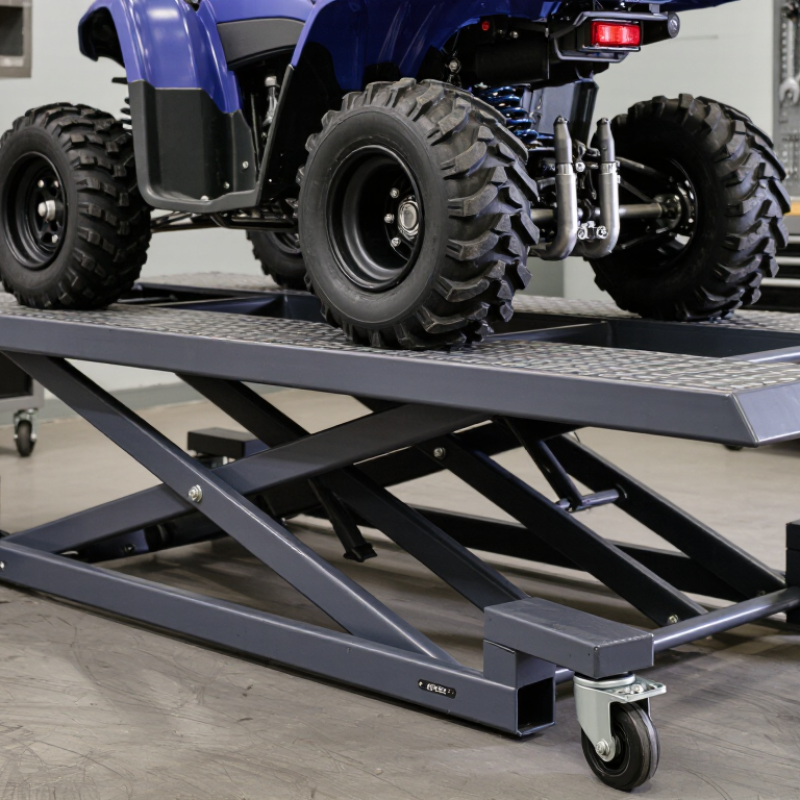
2026 Best ATV Lift Table for Sale?

What an ATV Lift Table Is and How It Works

An ATV lift table is a sturdy platform that raises a quad off the floor for maintenance. Most models use a hydraulic cylinder and scissor arms. Pumping a foot pedal builds pressure, extending the cylinder and lifting the platform. To lower it, the operator opens a release valve gradually. Some units use powered pumps instead.

The platform supports the ATV’s frame or wheels, depending on its design. Center the machine, secure it with restraints, and check the rated capacity before lifting. Use the mechanical safety lock once the table reaches working height; hydraulic pressure alone is not a dependable support. Small details matter. A slightly off-center load can shift as the platform rises.

The U.S. Bureau of Labor Statistics’ 2023 Survey of Occupational Injuries and Illnesses found that musculoskeletal disorders made up roughly one-quarter of workplace cases involving days away from work. That figure is not ATV-specific, and a lift table does not guarantee injury prevention. Still, raising a quad can reduce repeated bending during repairs. Buyers should compare platform size, minimum height, locking positions, and the ATV’s weight. Capacity figures can be easy to misread, especially when accessories add weight. Check the manual.

Common ATV Lift Table Types and Their Uses

ATV lift tables serve different shop needs. A hydraulic scissor table suits routine maintenance, such as tire changes and underbody checks. Its broad platform supports the machine while technicians raise it to a workable height. Choose a rated capacity above the ATV’s loaded weight, including accessories. Secure the wheels and follow the table’s operating instructions.

Air-over-hydraulic tables use compressed air to raise the platform, reducing repeated pumping in busy workshops. They need an air supply, so they may be less practical in a home garage. Low-profile tables have short ramps, helping operators load machines with limited ground clearance. A longer ramp can make loading easier, but it takes more floor space. The trade-off is real.

Safe support matters. The U.S. Consumer Product Safety Commission’s 2022 ATV-related injury report estimated 105,000 emergency-department-treated ATV injuries in the United States that year. This figure does not measure lift-table accidents, but it underscores why stable service setups deserve attention.

Check the platform width, locking mechanism, and tie-down points before buying. There is no perfect table. Measure your garage, and be honest about how often you will use it.

Key Features, Capacity, and Compatibility to Compare

A 2026 ATV lift table should match the machine, not just its advertised capacity. Weigh the ATV with fuel, accessories, and anything left on the rack. For example, a 650-pound ATV carrying 40 pounds of gear weighs 690 pounds before tools are added. Choose a table whose rated capacity exceeds the actual working load. ANSI MH29.1-2020 sets safety and design requirements for industrial scissor lift tables, but it does not confirm that a particular ATV will fit. Check the lift’s manual and rating plate.

Measure wheelbase, overall width, and tire track. Compare them with the platform dimensions, then check ground clearance and ramp angle. A narrow deck can leave little room for repositioning, while a tall ATV may contact a crossbar during lifting. Confirm that the table has secure wheel restraints or tie-down points, and consider whether its minimum height allows easy loading. These details are easy to miss. They matter.

Tips: Measure the widest tires and longest wheelbase yourself; published dimensions may exclude accessories. Test the loading approach on level ground, and keep the ATV centered. I would also leave space for a jack or tools, though that reduces usable platform area. Don’t treat capacity as a substitute for a stable fit.

Safety Requirements for Lifting and Servicing an ATV

2026 Best ATV Lift Table for Sale?

Safety Requirements for Lifting and Servicing an ATV

A lift table is only safe when its capacity exceeds the ATV’s weight and the load sits within the platform’s rated limits. Check the table, welds, pins, and hydraulic lines before each lift. Work on firm, level concrete, and keep the area clear of oil, tools, and loose gravel. A slight wobble matters. Stop and reposition the machine instead of trying to work around it.

Tips: Roll the ATV up slowly, using a suitable ramp. Center its weight, apply the parking brake, and secure the frame with rated straps. Chock the wheels if the lift design allows it. Keep fingers away from pinch points. Never rely on hydraulic pressure alone; engage the table’s mechanical safety lock before servicing.

Raise the platform only as high as the job requires, then check that it remains stable. Wear eye protection when inspecting or repairing components, and follow the ATV and lift manuals for approved lifting points. Do not climb onto the platform or exceed its stated load rating. If a lock pin feels stiff or a strap shifts, lower the table and correct the problem. It can feel slower, but a second stability check is worth the pause.

How to Choose an ATV Lift Table for Sale in 2026

2026 Best ATV Lift Table for Sale?

How to Choose an ATV Lift Table for Sale in 2026

Start with the ATV’s actual weight, not a guess based on its size. Check the owner’s manual, then include accessories that will stay mounted during service. Choose a table whose rated capacity safely covers that total; never assume a higher capacity makes poor positioning acceptable.

The U.S. Consumer Product Safety Commission’s 2022 ATV Annual Report estimated 112,300 emergency-department-treated ATV injuries in 2020. That figure is not lift-table data, but it underscores why stable support and careful maintenance matter.

Measure the wheelbase, tire width, and clearance around your work area. The platform should support the wheels without forcing the machine near an edge. Fit matters. Check the ramp angle, tie-down points, wheel stops, and whether the table has a mechanical safety lock for raised work.

Confirm its working height suits the jobs you do, from tire changes to underbody checks. Also ask about hydraulic service, replacement parts, and the floor space needed when the table is lowered. A table can look sturdy and still be awkward in a cramped garage. That detail is easy to miss.

Compare the manual’s rated load and safety instructions before buying; specifications vary, and there is no sensible substitute for checking the actual model.

FAQS

What does an ATV lift table do?

It raises a quad off the floor for maintenance. Most tables use a hydraulic cylinder and scissor arms.

How does a hydraulic lift table work?

Pumping a foot pedal builds pressure and raises the platform. Open the release valve gradually to lower it. Powered models use a pump.

How do I choose the right load capacity?

Check the ATV’s actual weight in its manual. Include accessories that will remain attached during service. It is tempting to trust capacity alone, but positioning matters too.

How should I position an ATV on the table?

Center the machine on the platform and secure its frame with rated straps. Use a suitable ramp and apply the parking brake. Small details matter.

Is hydraulic pressure enough to hold the ATV?

No. Engage the mechanical safety lock before working beneath or around the raised ATV. Never rely on hydraulic pressure alone.

What should I inspect before lifting?

Check the table, welds, pins, hydraulic lines, straps, and lock. Use firm, level concrete and clear away oil, tools, and loose gravel. A slight wobble matters.

What platform size and height should I look for?

Measure the ATV’s wheelbase and tire width, then check the platform and ramp dimensions. Choose a working height that suits your repairs and your garage space. Fit matters.

How should I lower the table safely?

Remove tools and people from the platform area, then release the valve gradually. If a pin feels stiff or a strap shifts, lower the table and correct it. Pause here.

Conclusion

An Atv Lift Table raises an ATV to a more comfortable working height, making routine inspection and servicing easier. It typically supports the vehicle on a platform while a lifting mechanism raises and lowers it. Models may be hydraulic, mechanical, or powered, and each type suits different workspaces, lifting needs, and budgets. Before choosing one, compare its rated capacity with your ATV’s weight, check that the platform dimensions and restraints suit the vehicle, and consider the table’s minimum and maximum working heights, stability, and ease of operation.

Safe use matters as much as lifting capacity. Position the table on a firm, level surface, center the ATV, secure it with appropriate restraints, and follow the equipment’s operating instructions. Never exceed the rated load or place yourself beneath an unsupported vehicle. In 2026, the best choice depends on your ATV, available storage and workspace, intended maintenance tasks, and preferred lifting method. Comparing these factors can help you select a dependable table that fits your needs and supports safer servicing.

Oliver

Oliver

Oliver is a seasoned marketing professional with a wealth of expertise in driving brand awareness and engagement. With a deep understanding of our company's product offerings, he consistently delivers high-quality content that enriches our professional blog. His insights not only shed light on......