
10 Best Pallet Lift Tables for Warehouses?

Time:2026-10-03 Author:Mason
0%

Choosing the right Pallet Lift Table can change how safely and efficiently a warehouse handles every load. A well-designed table keeps pallets near waist height, reduces awkward bending, and supports smoother transfers between forklifts, conveyors, and workstations. The wrong model can create instability, slow production, or force operators into uncomfortable positions.

Ergonomist Alan Hedge offers a useful principle: “The goal of ergonomics is to fit the task to the individual, not force the individual to fit the task.” That idea should guide every buying decision. Capacity matters, but it is only one part of the evaluation. Buyers should also examine platform size, lowered height, raised height, lifting speed, guarding, controls, maintenance access, and floor conditions. Think about a 2,000-pound pallet arriving every ten minutes. A table that works well in a showroom may struggle beside a cold dock, on uneven concrete, or during constant shift changes.

Small details matter. A guarded edge can prevent a foot injury. A reliable limit switch can stop unnecessary travel. Clear controls can reduce hesitation during busy loading periods. Still, no product is perfect. Some tables offer excellent lifting strength but occupy valuable floor space. Others save space but provide less flexibility for unusual pallet sizes. This guide reviews ten leading Pallet Lift Table options for warehouses, using practical specifications and everyday operating needs. Treat the rankings as a starting point, not a final answer. Measure your workflow carefully. The best choice is the one that fits your people, pallets, space, and maintenance reality.
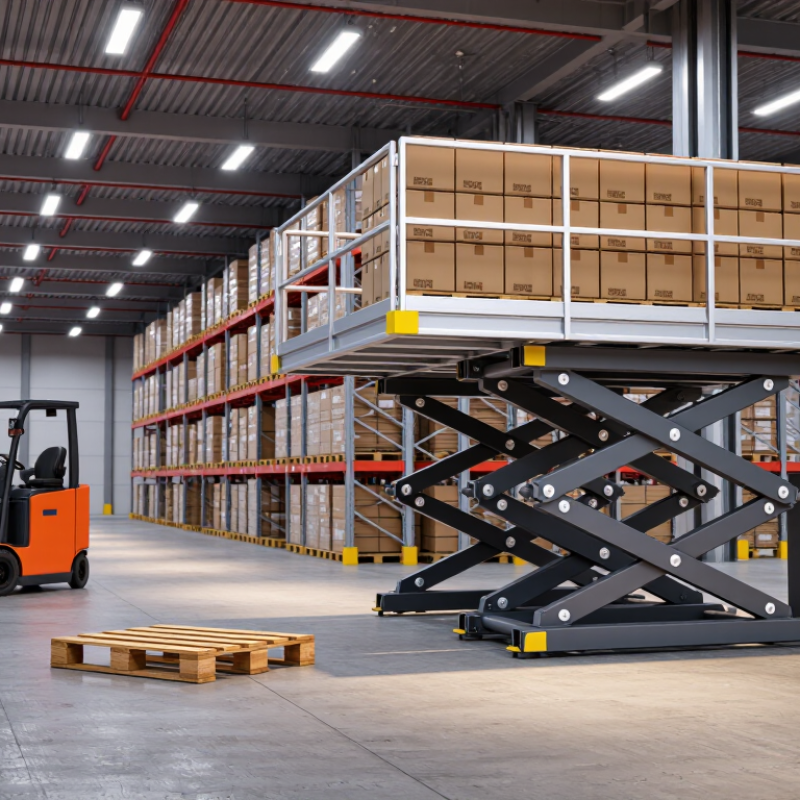
10 Best Pallet Lift Tables for Warehouses?

What Is a Pallet Lift Table and How Does It Work?

What Is a Pallet Lift Table and How Does It Work?

A pallet lift table is a powered platform that raises or lowers palletized goods to a safer working height. Its scissor legs move through hydraulic, pneumatic, or electric power. Operators place a pallet on the platform, activate the control, and adjust the height for loading, picking, or transfer work. It rises vertically. That simple movement can reduce repeated bending and reaching.

The U.S. Bureau of Labor Statistics reported more than one million workplace cases involving overexertion or bodily reaction in its 2022 injury data. A lift table cannot remove every ergonomic risk, but it can reduce awkward posture during frequent pallet handling. The NIOSH Revised Lifting Equation also shows why load weight, reach distance, frequency, and hand height must be evaluated together. A 1,000-kilogram pallet still needs proper load positioning and rated capacity.

A reliable selection process checks platform size, travel height, cycle frequency, guard protection, and emergency lowering features. ANSI MH29.1 provides safety guidance for industrial scissor lifts, while OSHA requirements address guarding and workplace operation. In practical use, uneven pallet loads can shift during elevation. Small details matter. Floor levelness, wheel clearance, and operator training deserve equal attention. The table is not a cure-all. That assumption fails when maintenance, inspection, or traffic control is neglected. Warehouse teams should compare the lift’s duty rating with real loads, not idealized averages.

Key Types of Pallet Lift Tables for Warehouse Operations

Choosing the right pallet lift table depends on load weight, lifting height, floor space, and work frequency.

In warehouse audits, I have seen small layout mistakes create long-term handling problems. The wrong table may block an aisle or force workers to reach awkwardly.

Stationary hydraulic lift tables suit fixed loading points and heavy pallets. They provide steady lifting power, but need proper floor preparation and routine inspections.

Hydraulic leaks can remain unnoticed. That is a real concern.

Electric lift tables work well where pallets move throughout the day.

Operators can adjust height with less physical effort. They are useful near packing stations, conveyor lines, and storage racks. Battery condition affects availability, especially during long shifts.

Manual lift tables cost less and fit lighter workloads.

They suit occasional use, short travel distances, and smaller facilities. However, repeated pumping may slow operations and fatigue workers.

Mobile lift tables add flexibility between receiving, storage, and dispatch areas. Locking casters are essential on uneven warehouse floors. Low-profile tables help load pallets close to ground level.

Scissor-lift designs offer stable vertical movement, but their pinch points need guarding and clear operating procedures.

Capacity labels should match the full pallet load, not an average estimate. I once underestimated packaging weight during a layout review. The table worked, but the margin was uncomfortably small.

Safety depends on equipment selection, training, inspections, and honest capacity calculations.

How to Evaluate Capacity, Lift Range, and Platform Size

Choosing a pallet lift table starts with capacity, not price. Rate the table for the full pallet, load, and handling forces. A 1,000-kilogram pallet may create higher stress when moved near the platform edge. The NIOSH Revised Lifting Equation uses a 51-pound load constant under ideal conditions, but real lifting conditions quickly reduce that value. A lift table should remove such manual strain, not disguise it.

Lift range must match the lowest pallet position and the operator’s working height. Measure both points on the warehouse floor. A small gap can force repeated bending. The 2023 U.S. Bureau of Labor Statistics report recorded 2.6 million nonfatal private-industry injuries and illnesses. That figure supports careful ergonomic planning, although it does not identify lift tables specifically.

Platform size should support the pallet footprint with visible clearance on every side. ISO 6780 recognizes common pallet formats, including 1,200 by 1,000 millimeters and 1,200 by 800 millimeters. Check the actual pallet, not only the catalog drawing. Include load-center distance, wheel clearance, guarding, and travel frequency in the specification. I have seen oversized platforms create awkward reaches. Bigger is not always safer. Recheck the design after observing one full shift, because clean calculations can miss rushed loading, uneven floors, and damaged pallets.

10 Best Pallet Lift Tables for Different Warehouse Needs

10 Best Pallet Lift Tables for Different Warehouse Needs

A pallet lift table should match the task, not simply the maximum rated load. The best choice depends on pallet weight, lift height, aisle space, and daily cycles. For standard receiving areas, a fixed hydraulic table offers stable elevation and simple maintenance. A mobile lift table suits warehouses that move pallets between packing stations. Low-profile models help forklifts approach from floor level. Scissor designs provide useful vertical travel in narrow work zones. Turntable platforms reduce reaching when operators rotate cartons manually.

Ergonomics also deserves serious attention. The U.S. Bureau of Labor Statistics’ 2023 injury data continues to identify overexertion and bodily reaction among major sources of nonfatal workplace injuries. A height-adjustable table can reduce repeated bending, but only when operators use it correctly. Adjustable forks, guardrails, and foot controls can improve control around uneven loads. Some features look impressive on paper. They may add service points and downtime.

For high-throughput distribution centers, powered tables with higher cycle ratings are more practical. MHI’s 2024 Annual Industry Report found that 83% of surveyed supply-chain professionals planned to increase technology investment. That trend supports smarter lifting equipment, but automation is not always the answer. Small warehouses may gain more from a compact manual or semi-powered unit. Check load-center ratings, platform dimensions, emergency lowering, and floor conditions before buying. Test one loaded pallet during a real shift. That exposes awkward controls, slow travel, and noise that specifications can miss.

10 Best Pallet Lift Tables for Warehouses? - 10 Best Pallet Lift Tables for Different Warehouse Needs

No. Recommended Lift Table Type Best Warehouse Need Typical Capacity Typical Lift Range Typical Platform Size Power and Control Key Safety Feature Typical Application
1 Manual Hydraulic Pallet Lift Table Low-volume lifting with limited access to electrical power 500–2,200 lb
(225–1,000 kg)
4–36 in
(100–915 mm)
20 × 32 to 32 × 48 in Foot-operated hydraulic pump; manual push or pull Mechanical maintenance lock and overload protection Small receiving areas, maintenance stations, and light pallet handling
2 Electric Scissor Lift Table Frequent lifting and ergonomic height adjustment 1,000–4,000 lb
(450–1,815 kg)
8–60 in
(200–1,525 mm)
36 × 48 to 54 × 60 in Electric-hydraulic power unit; push-button control Emergency stop, upper-limit switch, and safety toe guards Order picking, pallet assembly, and repetitive loading work
3 Low-Profile Pallet Lift Table Loading pallets directly from the floor without a pit 2,000–6,000 lb
(900–2,720 kg)
2.5–48 in
(65–1,220 mm)
42 × 48 to 54 × 72 in Electric-hydraulic or pneumatic-hydraulic drive Platform safety perimeter and anti-slip deck surface Floor-level pallet transfer and dock-side loading
4 Mobile Scissor Lift Table Flexible lifting at multiple warehouse locations 330–2,200 lb
(150–1,000 kg)
11–53 in
(280–1,350 mm)
20 × 32 to 32 × 48 in Rechargeable battery or manual hydraulic pump Locking casters, automatic braking, and emergency lowering Kitting, replenishment, repairs, and temporary work cells
5 High-Capacity Industrial Lift Table Heavy pallets, dense loads, and industrial materials 4,000–12,000 lb
(1,815–5,445 kg)
12–60 in
(305–1,525 mm)
48 × 48 to 72 × 96 in Heavy-duty electric-hydraulic system; pendant control Load-holding valves, mechanical locks, and guarded scissor areas Metal, automotive, machinery, and bulk-material warehouses
6 Stainless Steel Lift Table Washdown, corrosion resistance, and hygienic handling 1,000–4,000 lb
(450–1,815 kg)
8–48 in
(200–1,220 mm)
32 × 48 to 48 × 60 in Sealed electric-hydraulic or pneumatic components Corrosion-resistant frame, sealed controls, and washable deck Food, beverage, pharmaceutical, and clean manufacturing storage
7 Turntable Pallet Lift Table Reducing operator reaching and pallet-side walking 1,000–4,000 lb
(450–1,815 kg)
8–48 in
(200–1,220 mm)
36–60 in diameter or rectangular equivalent Electric-hydraulic lift with manual or powered rotation Rotation stop, load restraint, and maintenance locking device Palletizing, depalletizing, carton picking, and packaging lines
8 U-Shape Pallet Lift Table Fast pallet loading with a pallet jack 2,000–6,000 lb
(900–2,720 kg)
3–34 in
(75–865 mm)
Typical opening for 40 × 48 in pallets Electric-hydraulic power unit; foot switch or remote control Safety toe protection, overload valve, and anti-slip platform Pallet transfer points, staging areas, and dispatch operations
9 In-Ground Pallet Lift Table Permanent installation with minimal raised-floor obstruction 2,000–10,000 lb
(900–4,535 kg)
6–72 in
(150–1,830 mm)
40 × 48 to 72 × 96 in Electric-hydraulic system; fixed pendant or foot control Pit-edge guarding, mechanical locks, and emergency stop High-throughput loading zones and fixed production interfaces
10 Heavy-Duty Dock Lift Table Bridging height differences between trucks and warehouse floors 6,000–12,000 lb
(2,720–5,445 kg)
12–72 in
(305–1,830 mm)
60 × 72 to 72 × 120 in High-capacity electric-hydraulic drive; remote pendant control Vehicle restraint integration, safety lips, and mechanical locks Loading docks, cross-docking areas, and freight transfer operations

Note: The specifications shown are typical industry ranges for comparable pallet lift table configurations. Actual capacity, dimensions, lift height, power requirements, and safety equipment vary by design and should be verified against the equipment’s rated specification before purchase.

Safety, Maintenance, and Installation Considerations

When comparing the 10 best pallet lift tables for warehouses, safety should guide the decision. Select a table with a rated capacity above the heaviest planned load. Confirm the pallet stays centered during lifting. An uneven load can shift suddenly. Small details matter. Operators need clear access to controls, stable footing, and unobstructed visibility. Guardrails, toe protection, emergency stops, and mechanical supports should match the work environment. A lift table is not a shortcut for poor warehouse layout.

Installation requires more than positioning the equipment on the floor. Check the slab strength, levelness, drainage, and available overhead clearance. Electrical or hydraulic connections should be completed by qualified personnel. Follow the equipment manual and isolate energy before testing or servicing. Maintenance should include inspections of welds, pins, rollers, hoses, fasteners, and safety devices. Lubricate approved points and record unusual noise, drifting, or uneven movement. A checklist helps, but it can create false confidence when workers rush through it.

Tips: Mark the operating zone with visible floor lines. Keep feet and loose clothing away from moving parts. Test the emergency stop before regular use. Never exceed the posted load rating. Recheck anchor bolts after initial operation, because settling can occur. Review training after any incident or equipment change. Even experienced teams miss small warning signs, so encourage workers to report them early.

FAQS

How do I choose the right pallet lift table?

Match the table to load weight, lifting height, floor space, and work frequency. Fixed heavy pallets suit stationary hydraulic tables. Moving workflows may need electric or mobile models. Price alone can mislead.

How should I calculate capacity?

Include the full pallet, packaging, and handling forces. Check weight near the platform edge. Capacity labels must match the complete load. I once underestimated packaging weight. The margin felt uncomfortably small.

How do I select the correct lift range?

Measure the lowest pallet position and the operator’s working height. Measure directly on the warehouse floor. A small gap can cause repeated bending. Check the setup during a real shift.

What platform size is suitable?

The platform should support the pallet footprint with visible clearance on every side. Check actual pallets, not only catalog drawings. Consider load center, wheel clearance, and guarding. Bigger is not always safer.

When is a stationary hydraulic table suitable?

It suits fixed loading points and heavy pallets. It provides steady lifting power. Proper floor preparation is necessary. Routine inspections matter. Hydraulic leaks may remain hidden.

When should I use an electric lift table?

Electric tables suit frequent pallet movement near packing stations, conveyors, and storage racks. Operators adjust height with less physical effort. Battery condition affects availability. A weak battery can interrupt a long shift.

Are manual lift tables practical for smaller facilities?

Manual tables fit lighter workloads, occasional use, and short travel distances. They usually cost less. Repeated pumping can slow operations and fatigue workers. The labor impact is easy to overlook.

What safety details matter for mobile and scissor-lift tables?

Mobile tables need locking casters, especially on uneven floors. Scissor designs require guarding around pinch points. Clear operating procedures are essential. Train workers and inspect equipment regularly. Recheck everything after one full shift.

Conclusion

A Pallet Lift Table is a valuable warehouse tool designed to raise and lower palletized goods, helping workers position materials at a comfortable and efficient height. This article explains how lift tables operate and reviews key types, including stationary, mobile, scissor, and low-profile models. It also outlines how to evaluate essential specifications such as load capacity, lifting range, platform dimensions, power source, and mobility to match different warehouse tasks.

The guide presents 10 Pallet Lift Table options for applications such as loading, unloading, order picking, production support, and space-conscious operations. It compares their practical advantages without focusing on specific brands, helping readers identify the right solution for their workflow. Finally, the article highlights important considerations for safe installation, operator training, routine inspections, lubrication, load distribution, and preventive maintenance. Choosing and maintaining the appropriate lift table can improve ergonomics, support productivity, and create a safer, more organized warehouse environment.

Mason

Mason

Mason is a seasoned marketing professional with a deep expertise in the company's offerings and a passion for driving brand awareness. With a strong background in digital marketing strategies, he has an innate ability to connect with diverse audiences and effectively communicate product benefits.......